Skip to content
1942: shipwrecked in shark infested seas

Reconstructions

The night of 30 October 1942

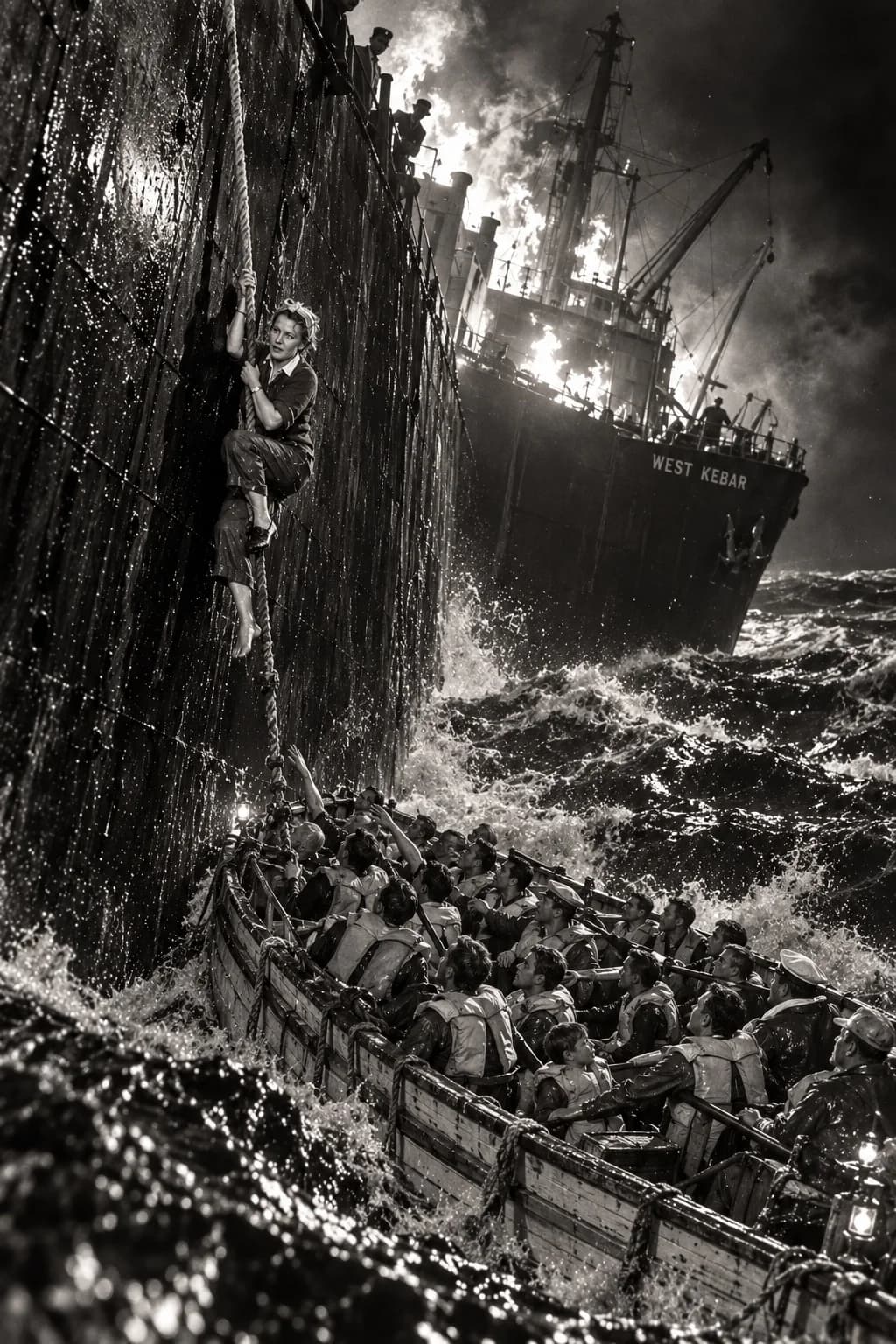
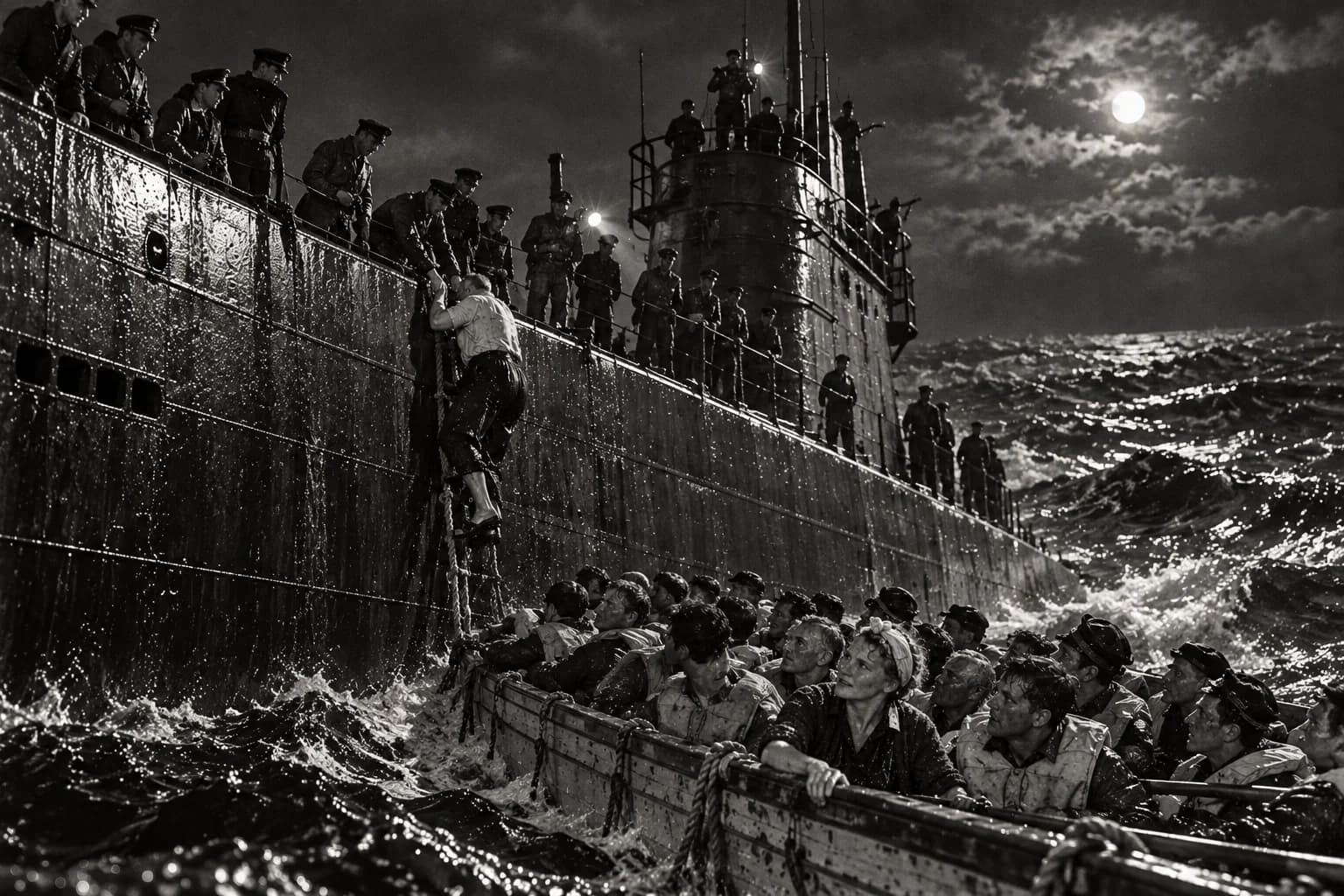
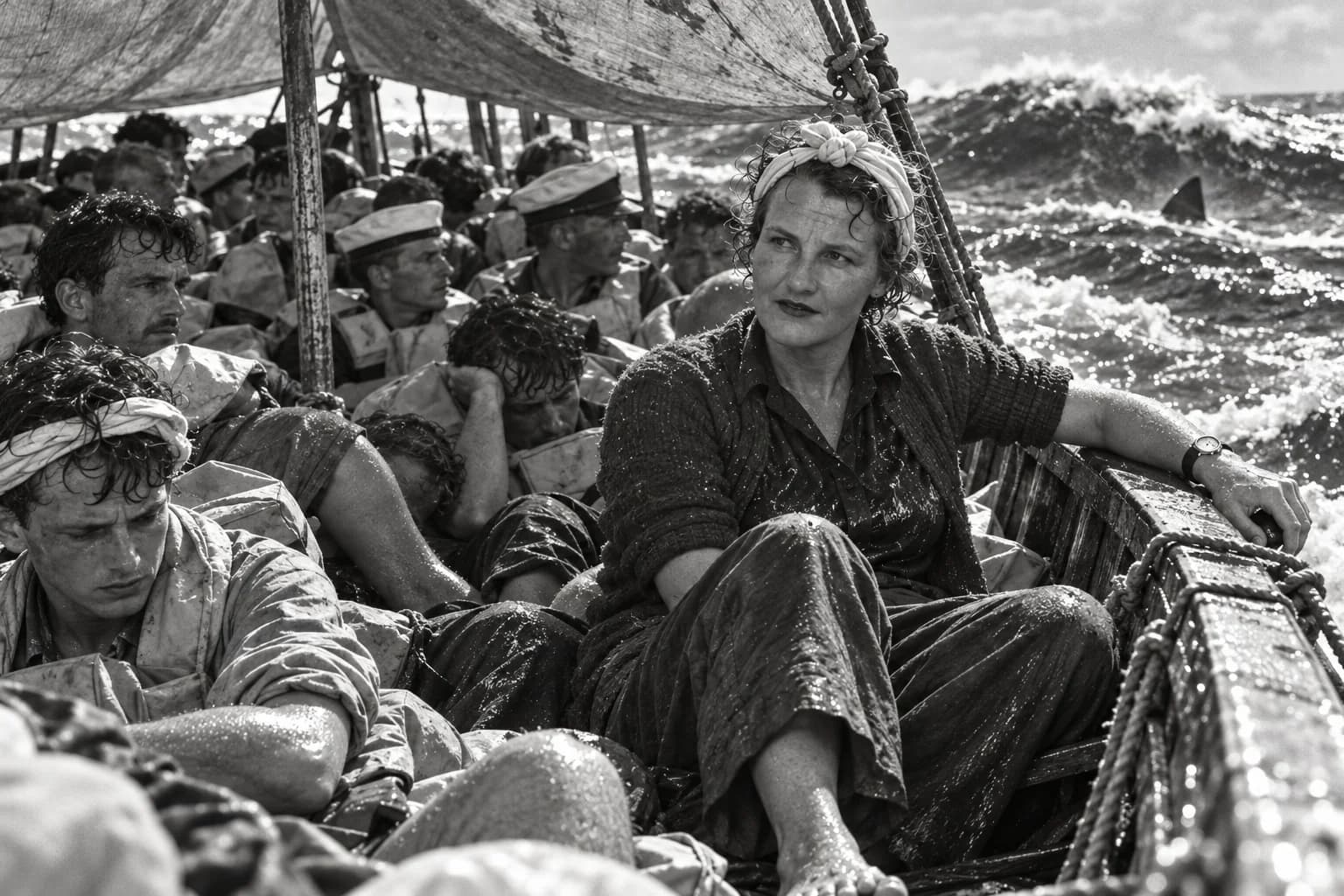
There are no photographs of what happened in the Atlantic that night. These three plates were made for this book from Elizabeth’s own account of it. Every one of them is a reconstruction.

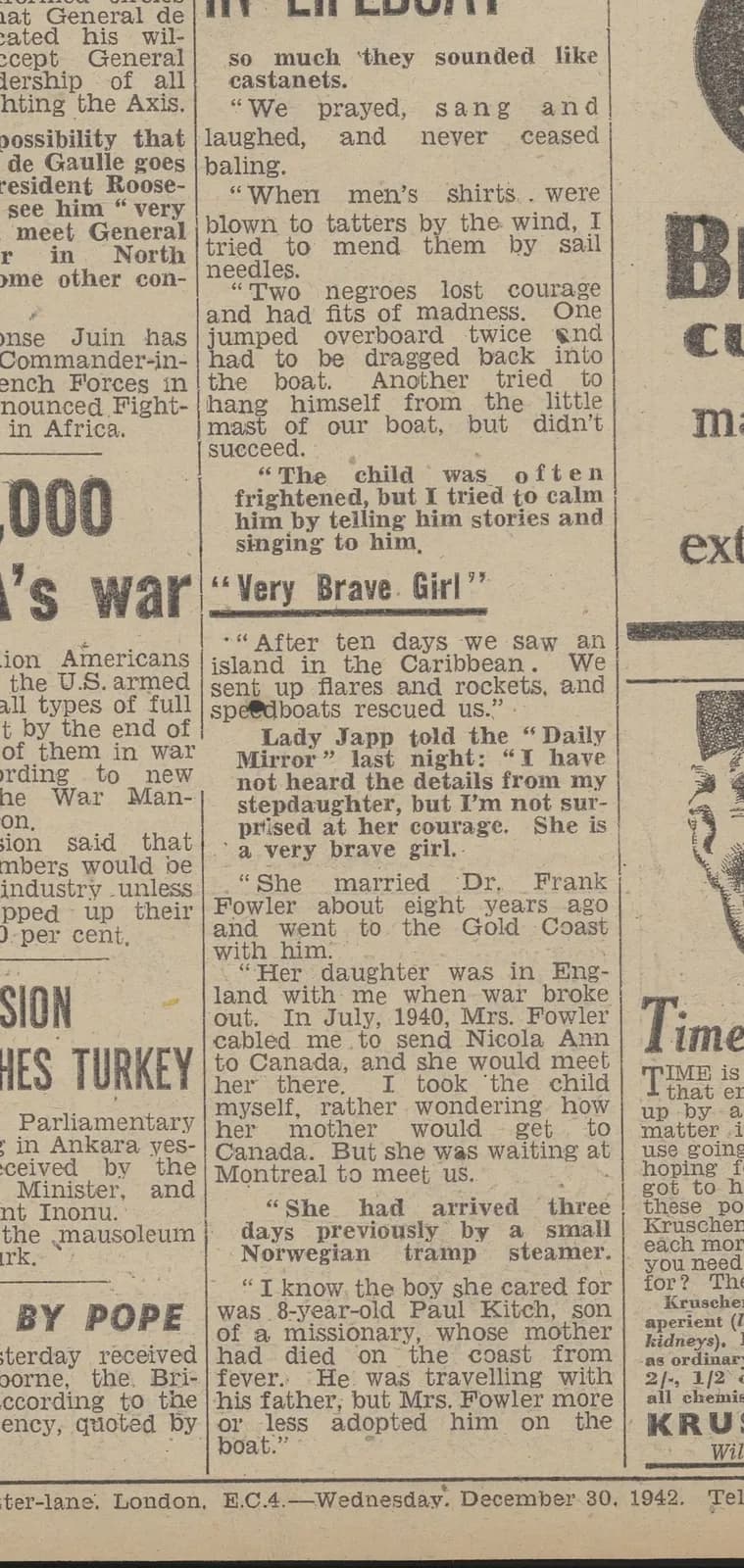
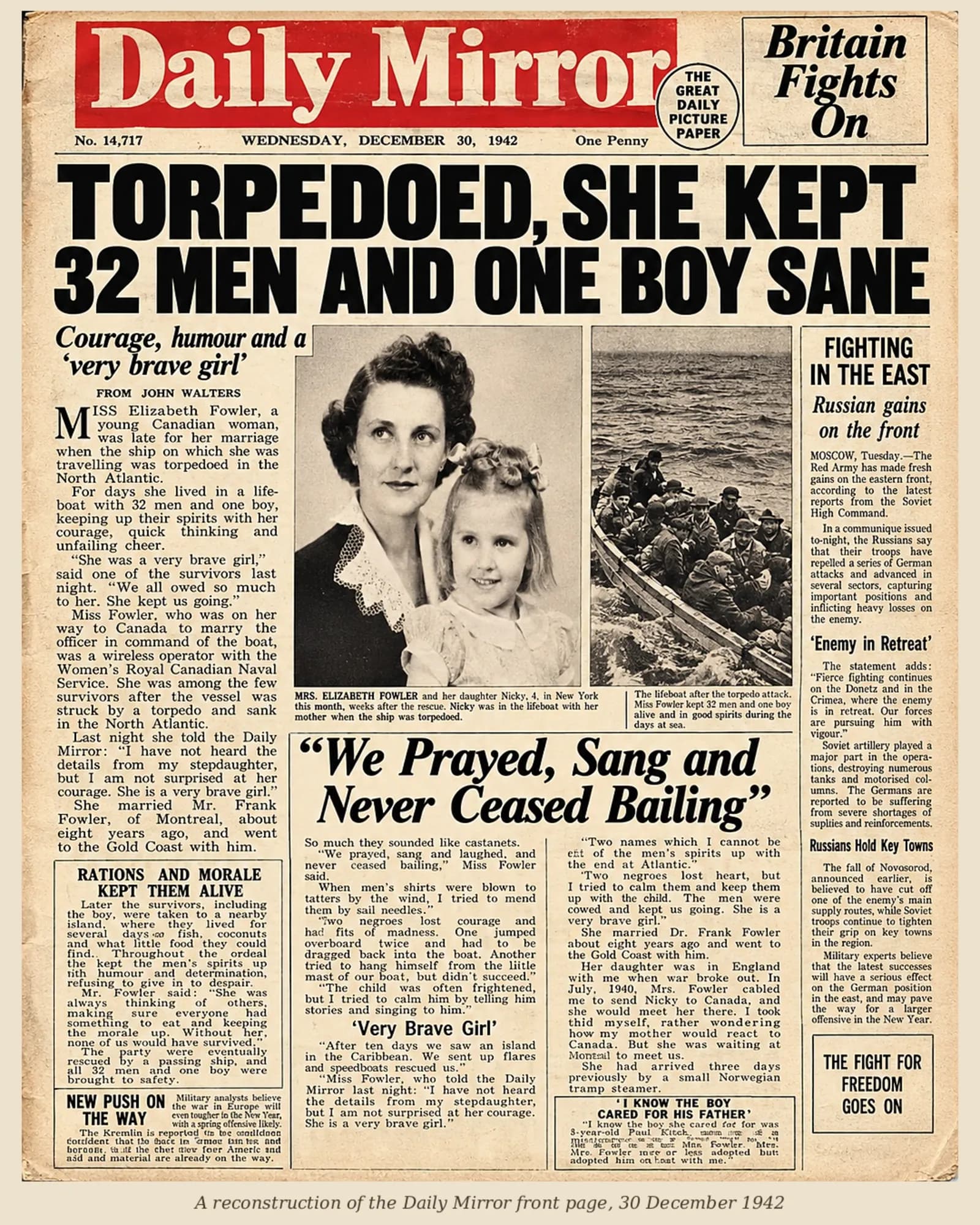
Daily Mirror · Wednesday 30 December 1942

Torpedoed, she kept 32 men and one boy sane

From John Walters, New York, Tuesday

“I was talking to the captain and knitting when torpedoes were fired at the ship without warning.”
Elizabeth Fowler, in the Daily Mirror
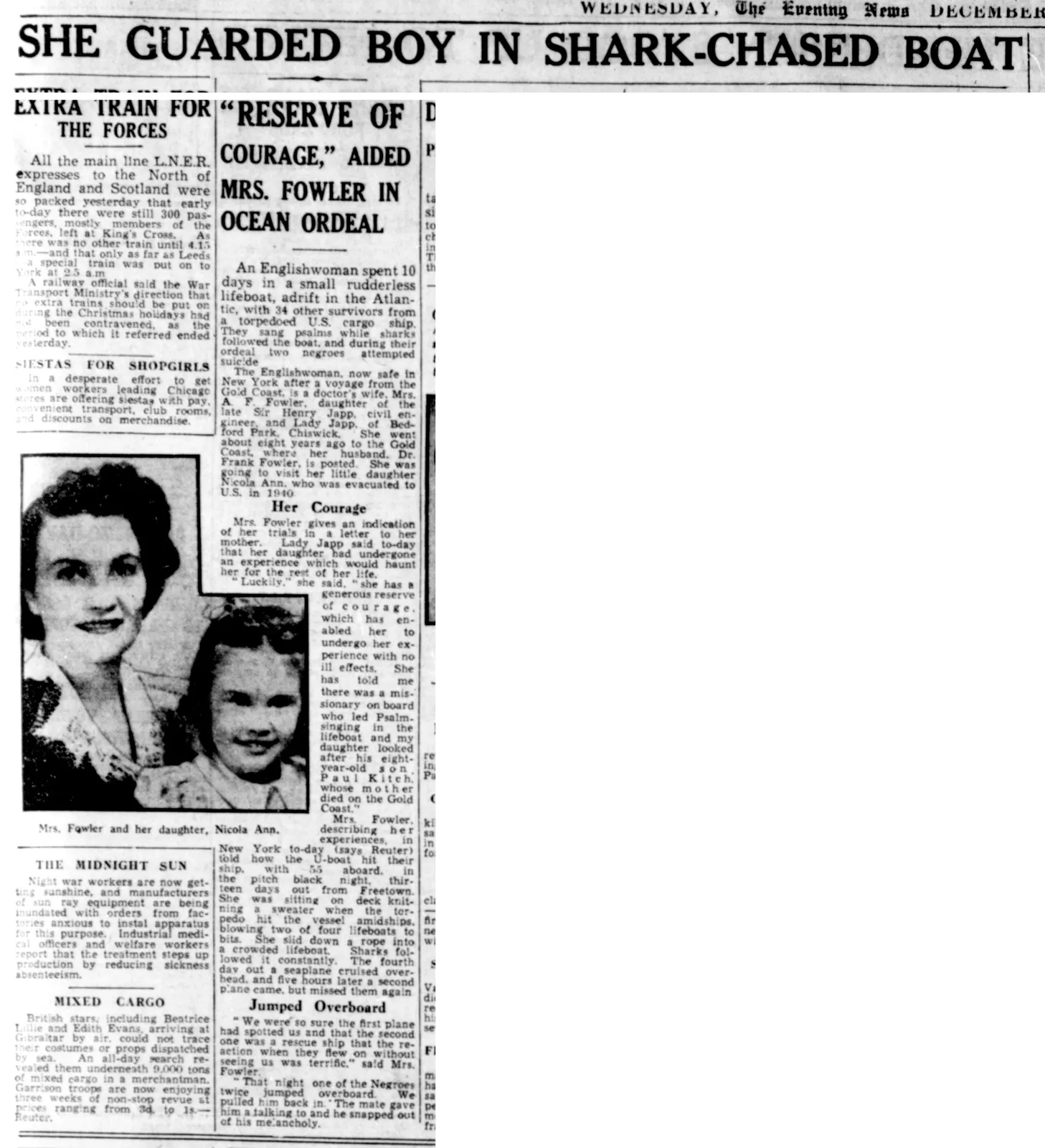
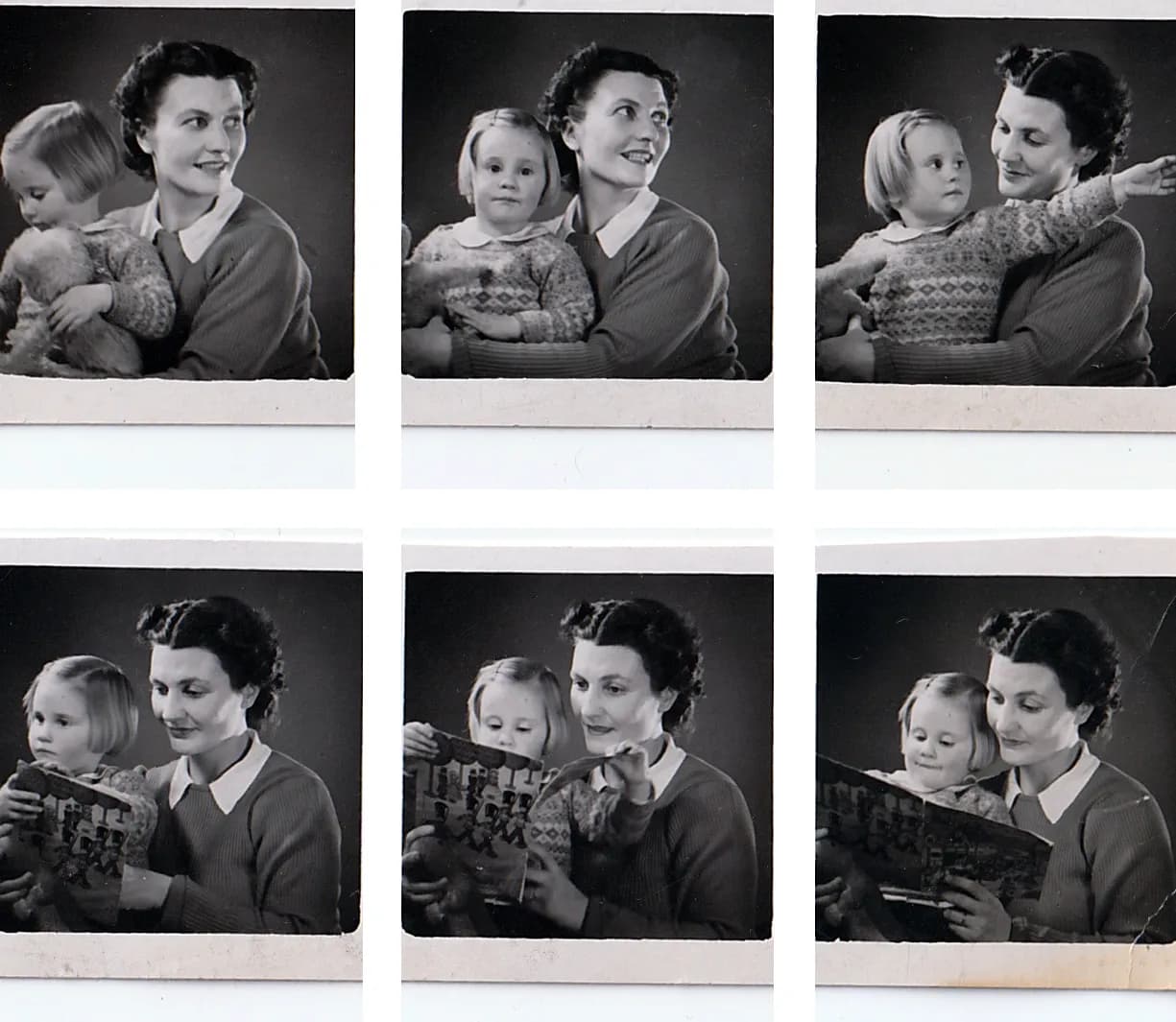
A reconstruction of the Daily Mirror front page of 30 December 1942: the headline “Torpedoed, she kept 32 men and one boy sane” over a photograph of Elizabeth Fowler with her daughter Nicky
A reconstruction of the front page. The Daily Mirror broke the story on Wednesday 30 December 1942. Only a trimmed clipping survives in the family papers, so Kate has rebuilt the page from it. The Mirror archive is looking for the original.
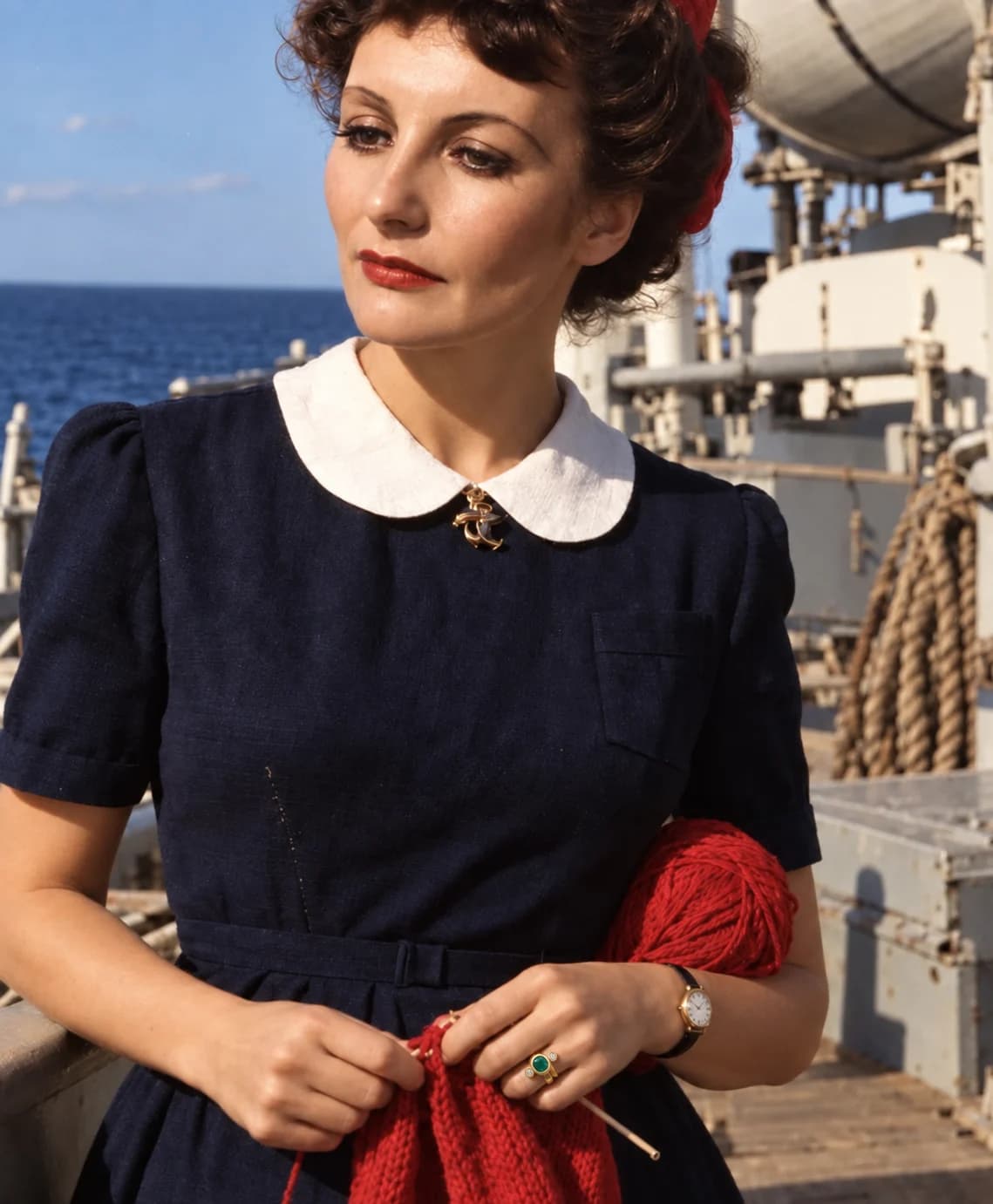
A reconstruction, in colour: Elizabeth Fowler on the deck of the West Kebar in her dark blue linen dress with a white collar and an anchor brooch, knitting red wool, a gold watch on her wrist and a green ring on her finger

Knitting on the boat

“I had my knitting, so I kept on at it in the darkness.”

On the deck of the West Kebar, October 1942. My granny Liz Fowler wears her dark blue linen dress with its white piqué collar. She had only just finished knitting a short scarlet jacket. It was all she had against the weather in the lifeboat.

Reconstruction.

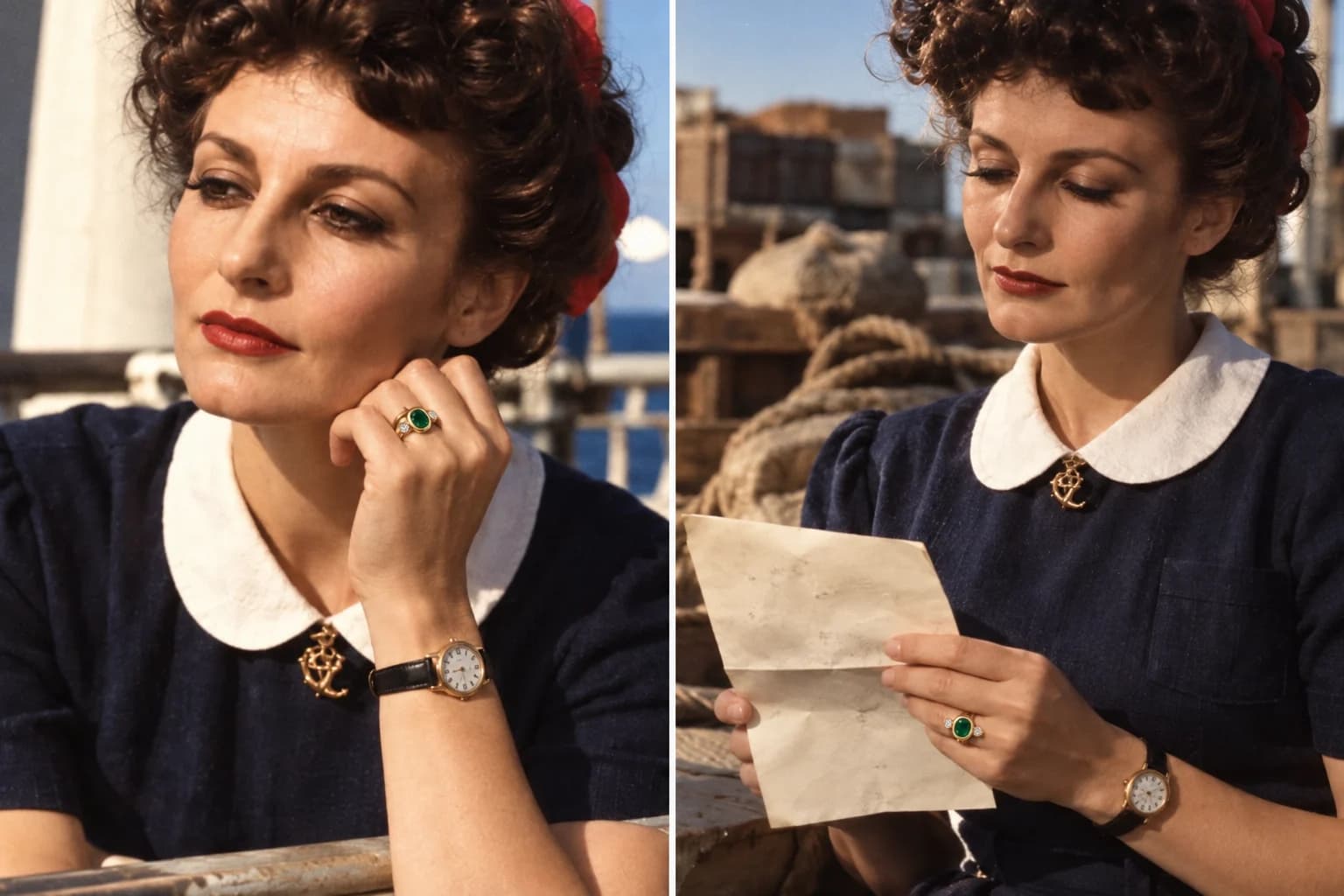
A reconstruction, in colour, in two halves: Elizabeth Fowler on deck in her dark blue linen dress, resting her chin on her hand with her green ring and gold Rolex showing, and reading a folded letter among the ropes and crates

The blue dress

“I had on a dark-blue linen dress. What had once been a crisp white piqué collar was now a limp grey rag.”

This is my granny Liz Fowler on the West Kebar in October 1942. She wore this dress for all ten days in the lifeboat. In 1944 it went into the window of Lord and Taylor on Fifth Avenue. On her wrist is the gold Rolex her father gave her for her twenty-first birthday. I have the very same watch today.

Reconstruction.

A reconstruction: Elizabeth Fowler goes down a rope from the side of the burning West Kebar towards a crowded lifeboat in a heavy sea at night

Abandon ship

“I got over the rail, took the rope, and fell. My legs wrapped round it and my arms, not my hands, held me to it, because my hands were torn open by the speed of it in the first yard and let go.”

Just after midnight on 30 October 1942 a German submarine, U-129, torpedoed the American freighter West Kebar in the mid Atlantic, three hundred and sixty miles north-east of Barbados. Liz Fowler was the only woman on board. She went over the rail and down a thirty foot rope into the lifeboat, in the dark, with the ship on fire above her. She had lost a shoe on the deck. She crashed into the boat on top of several men. Thirty-two men, a boy of eight and one woman went into that lifeboat. They would be in it for ten days, covered in palm oil from the sinking ship.

A reconstruction: the surfaced submarine U-129 alongside the lifeboat by moonlight, the Captain climbing her side while the boat looks up

The U-boat

“The submarine rose up out of it like something from the sea floor, glistening silver, with all the grave grandeur with which our ship had gone down.”

The same night the West Kebar was sunk, 30 October 1942, the German submarine U-129 surfaced beside the lifeboat. She held it in her searchlight. A German voice called out in careful English for the name of the ship. The Germans took the Captain and the wireless operator aboard for questioning. As he climbed up to them the Captain said, “Well, I shall be hoeing potatoes in Hamburg.” In the boat Liz, covered in palm oil like everyone else, wondered if they would take the only woman next. Half an hour later the submarine came back alongside and handed both men back. The Germans wished them a cordial goodnight. Then she dived and was gone.

A reconstruction: Elizabeth Fowler sitting at the gunwale of the crowded lifeboat under a makeshift sail, the gold Rolex on her left wrist

The lifeboat

Elizabeth Fowler, known as Liz, in the lifeboat of the West Kebar in the mid Atlantic, October 1942. On her left wrist is the gold Rolex her father, Sir Henry Japp, gave her for her twenty-first birthday on 13 March 1929. He was working near Reading that year. He bought it from W. Austin Balson, a jeweller in the town. It is a small, round ladies’ watch in 9 carat gold. It has a silver face with black numbers and the name Rolex. It is worn on a black leather strap. The back is engraved: Liz on your 21st, with love, Papa & Kathy, 13.03.29. It came in a grey Rolex box lined with cream silk. The watch sits in dark velvet. A label inside reads: Especially made for W. Austin Balson, Reading. In Chapter Ten, at dawn in the boat, only three watches are still working. Hers is one of them, and it is still keeping the correct time. Her granddaughter, Kate Sissons, has the very same watch today, in its original box.

This is a reconstruction.

Standing Room Only by Elizabeth Fowler, retold by Kate Sissons.

Ten days

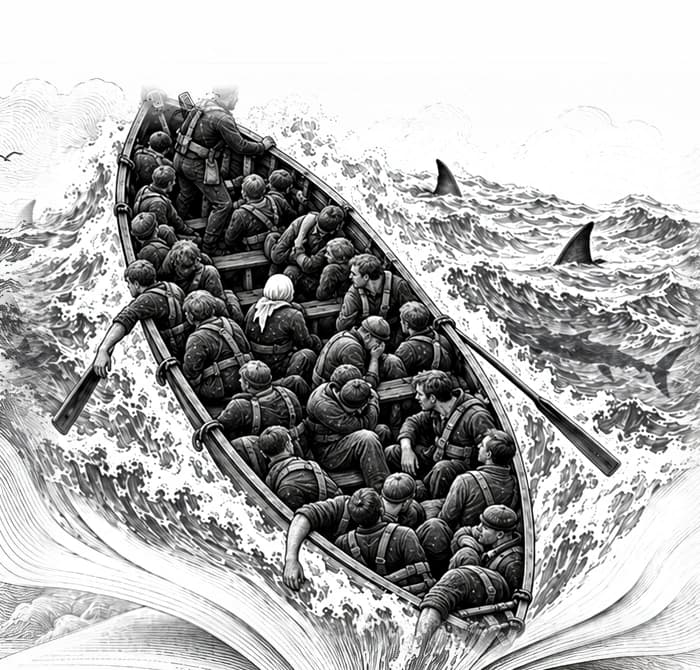
The lifeboat, from the illustration: a crowded boat riding a heavy sea
  • Shark infested waters
  • 32 men
  • One woman and a boy
  • Two ounces of water a day
  • Weevil ridden crackers
  • Danger
  • Fear

12.11am, 30 October 1942

Prologue

The steamship West Kebar of New York, 5,620 tons, manganese ore and palm oil and mahogany in her holds, nine knots on a straight course, no escort, no zigzag, heavy rain, and now a hole in her side twenty-five feet by thirty. Three men died in the first minute.

The terrified occupants watched as the dark, glistening spectre of the huge U-boat rose up beside them. The hatch opened and, in perfect English, a German voice demanded the Captain who was winched aboard. They feared he was gone forever.

What followed was ten days of 2 oz water ration per day. Weevil infested biscuits and a dose of fear. Naked men were given what fabric and clothes Elizabeth had. Two desperate men tried to end their lives but were rescued by the others. No sleep. Nowhere to move. Rammed together unable to stretch or lie flat for ten long days and nights in the driving rain and high seas of the mid-Atlantic…
1 of 7

Grand Central, Monday 21 December 1942

And then Grand Central Station in New York, where a four year old in her only coat was waiting for a woman she could not remember.

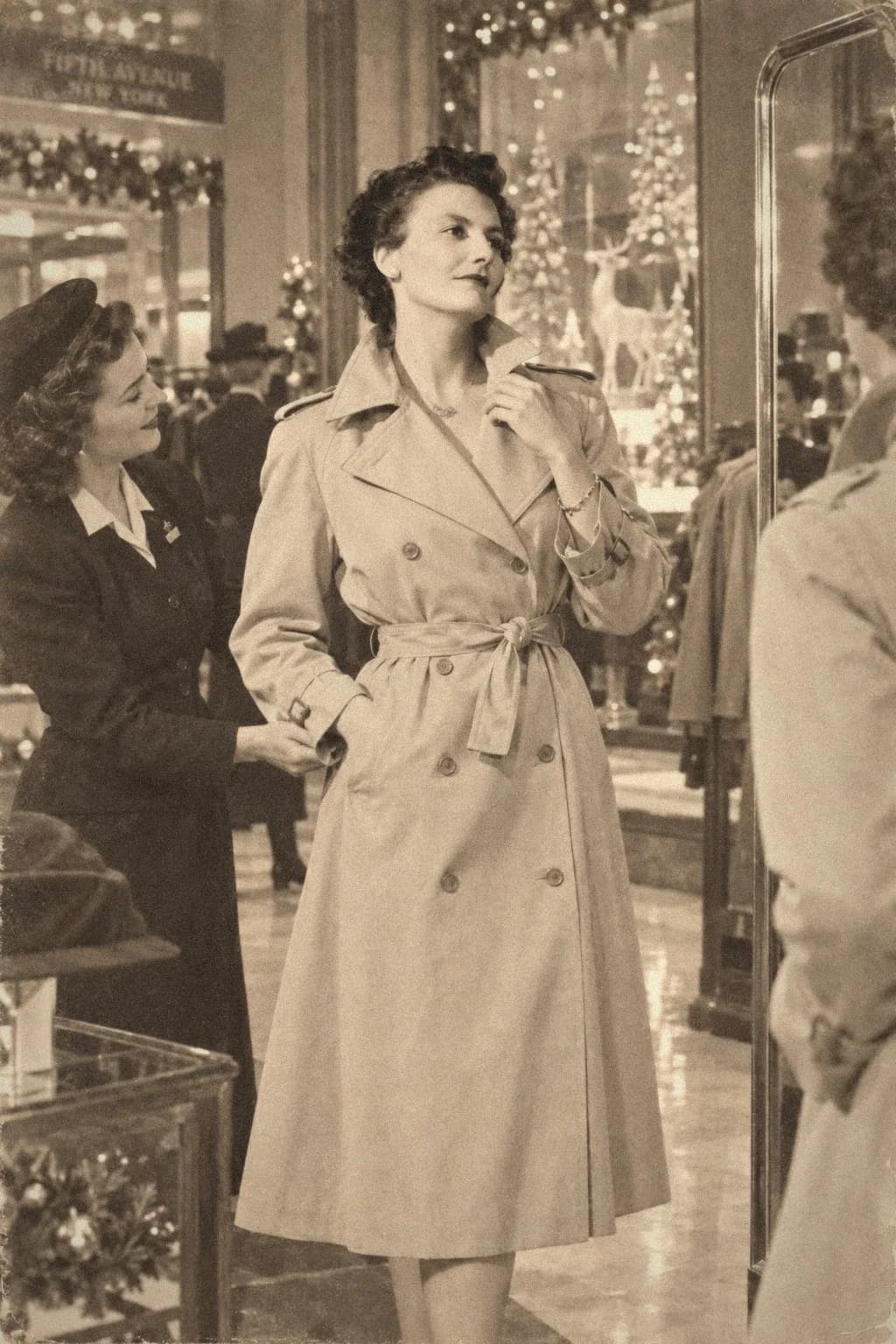
Reconstruction: Elizabeth Fowler trying on a Burberry trench coat in a Fifth Avenue store, New York, 1943

Elizabeth Fowler buying a new Burberry trench coat to replace the one she lost in the shipwreck. She loved it so much she considered running back to her cabin to retrieve it as the Captain called to evacuate. Saks Fifth Avenue, 611 Fifth Avenue, New York, 1943. A Burberry trench coat cost about 75 dollars that year, roughly 19 pounds. In 2026 a new Burberry trench coat retails at around £2,000, or about 2,700 dollars.

Reconstruction.

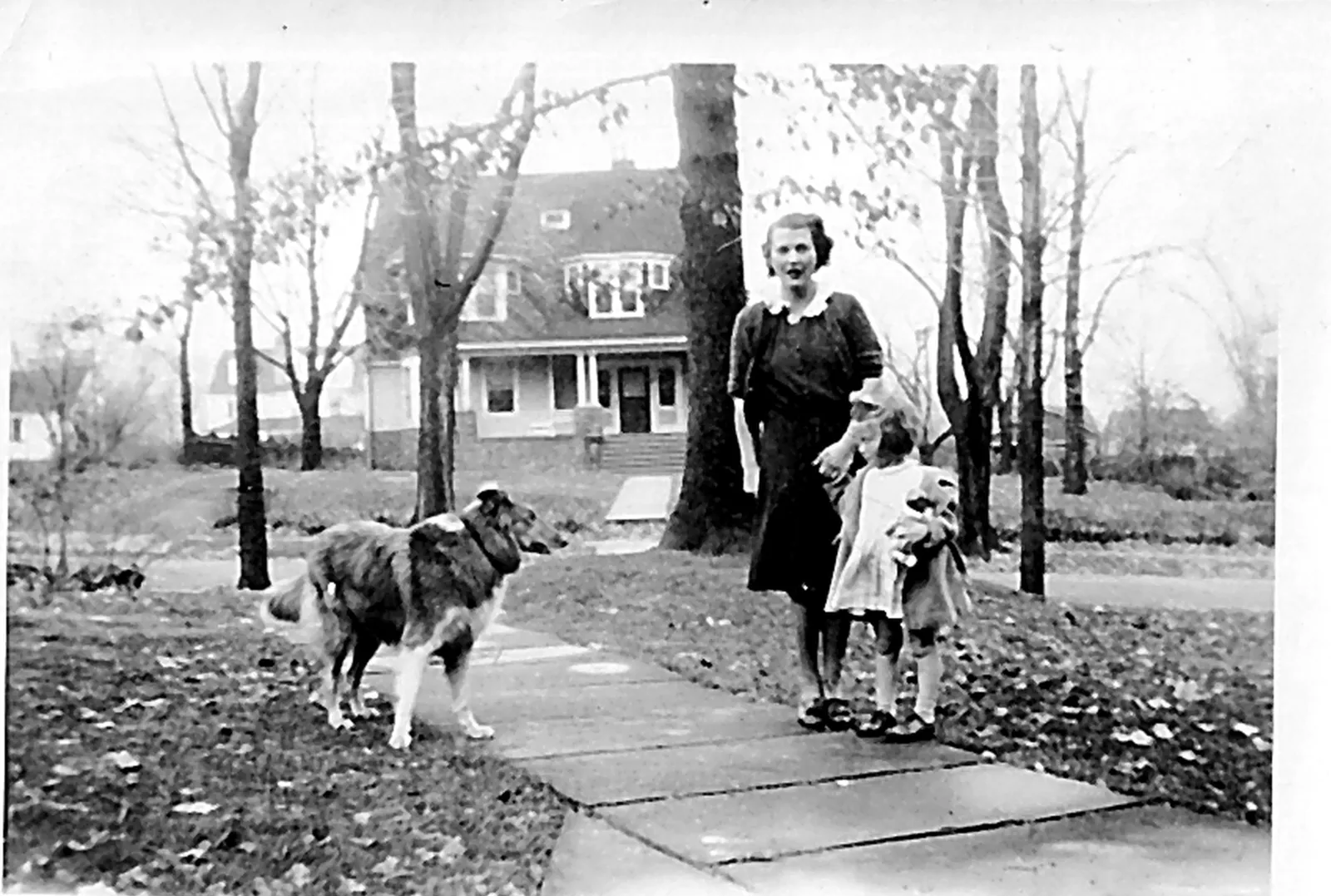
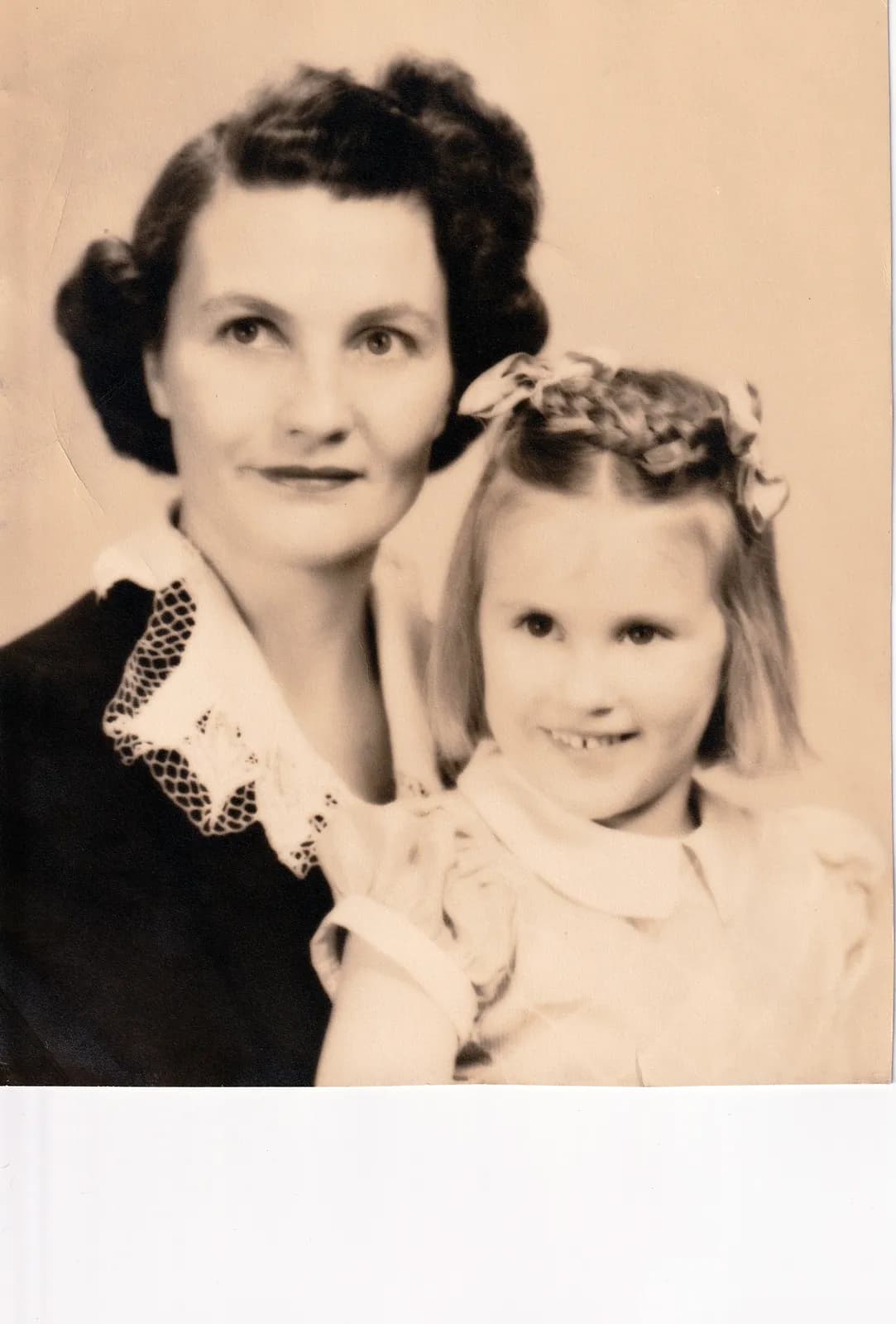
Elizabeth and Nicky Fowler, New York, December 1942
Elizabeth and Nicky Fowler, New York, December 1942.
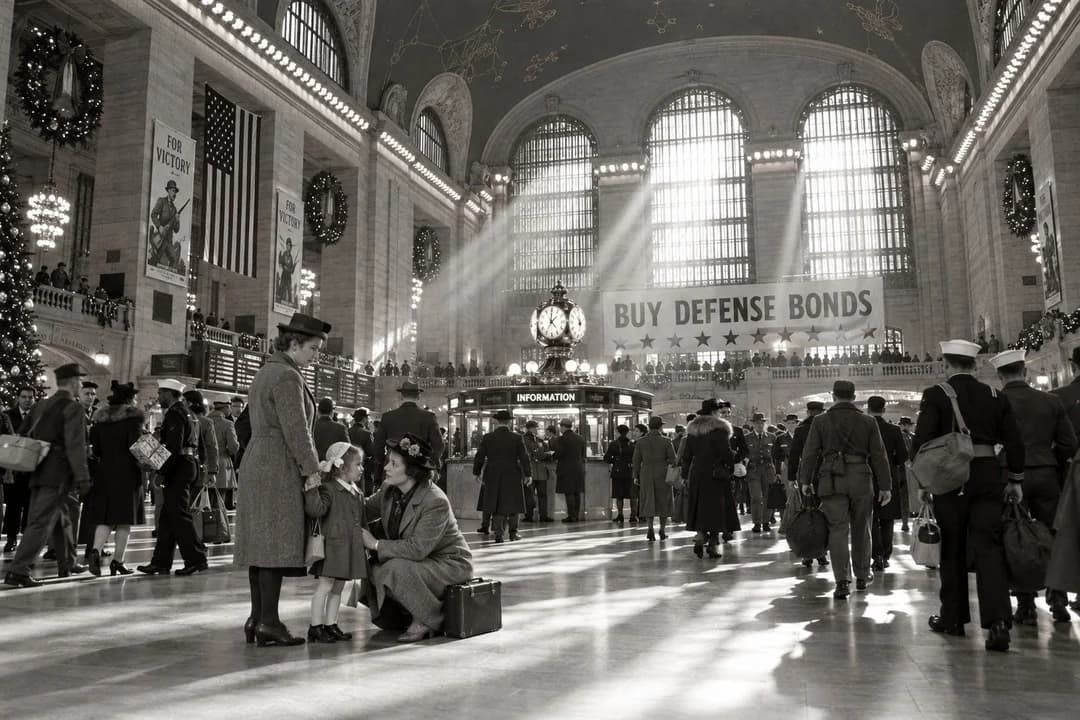
A reconstruction: under the clock on the concourse of Grand Central, Elizabeth Fowler crouches in her grey coat beside a small girl, Nicky, while a woman holds the child's hand and servicemen and travellers pass in shafts of winter light

Under the Clock

“I crouched down on the tiled floor outside the Oyster Bar in my grey coat with ten thousand people going past, and I said, ‘Hello, Nicky.’ And she looked at me the way you look at a person who has spoken to you on a bus. Politely. Waiting for it to be over.”

Grand Central, New York, Monday 21 December 1942. Seven weeks after the West Kebar was torpedoed, my granny Liz Fowler meets her daughter Nicky, my mother, aged four. Nicky had not seen her for two and a half years and did not know her.

Reconstruction.

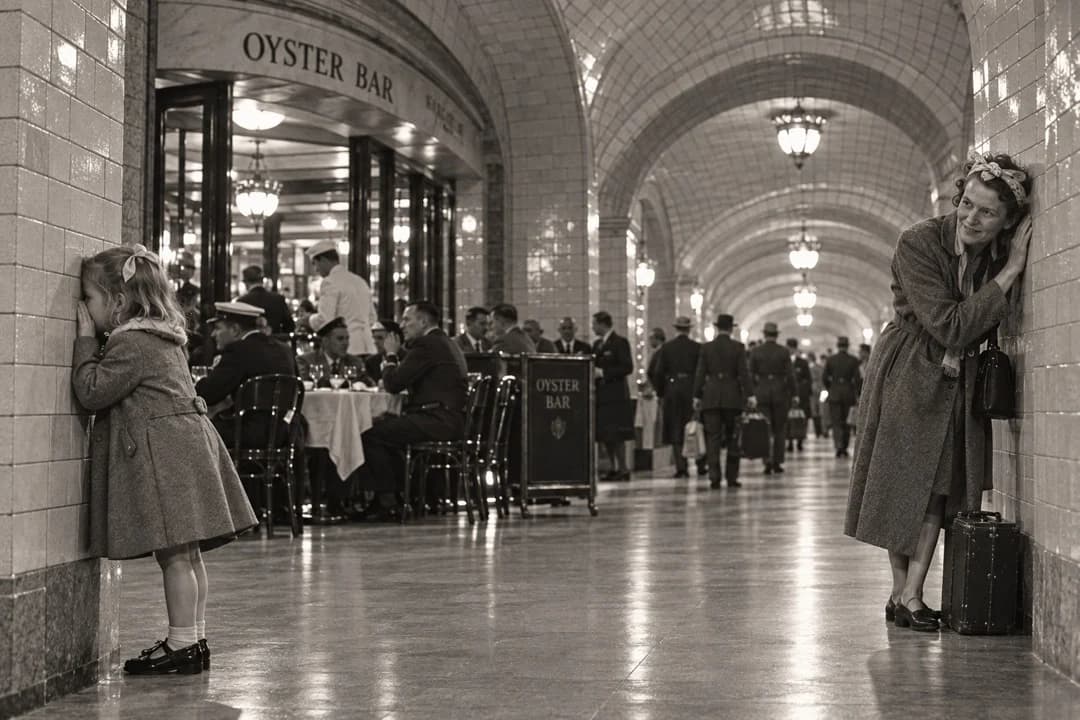
A reconstruction: outside the Oyster Bar under the tiled arches of Grand Central, a small girl stands with her face to the tiles in one corner while Elizabeth Fowler leans to the wall in the far corner, whispering

The Whispering Wall

“She took Maureen to the whispering wall and put her in the far corner, and then she came back and took my hand, because there was nobody else’s to take, and led me to the near corner and put my face to the tiles, and whispered. I heard it as if she had spoken into my ear. What she said was, ‘Teddy says hello.’ It was not much. It was a beginning.”

Outside the Oyster Bar, Grand Central, the same day. A whisper there runs round the tiled arches to the far corner, forty feet away.

Reconstruction.

What they said

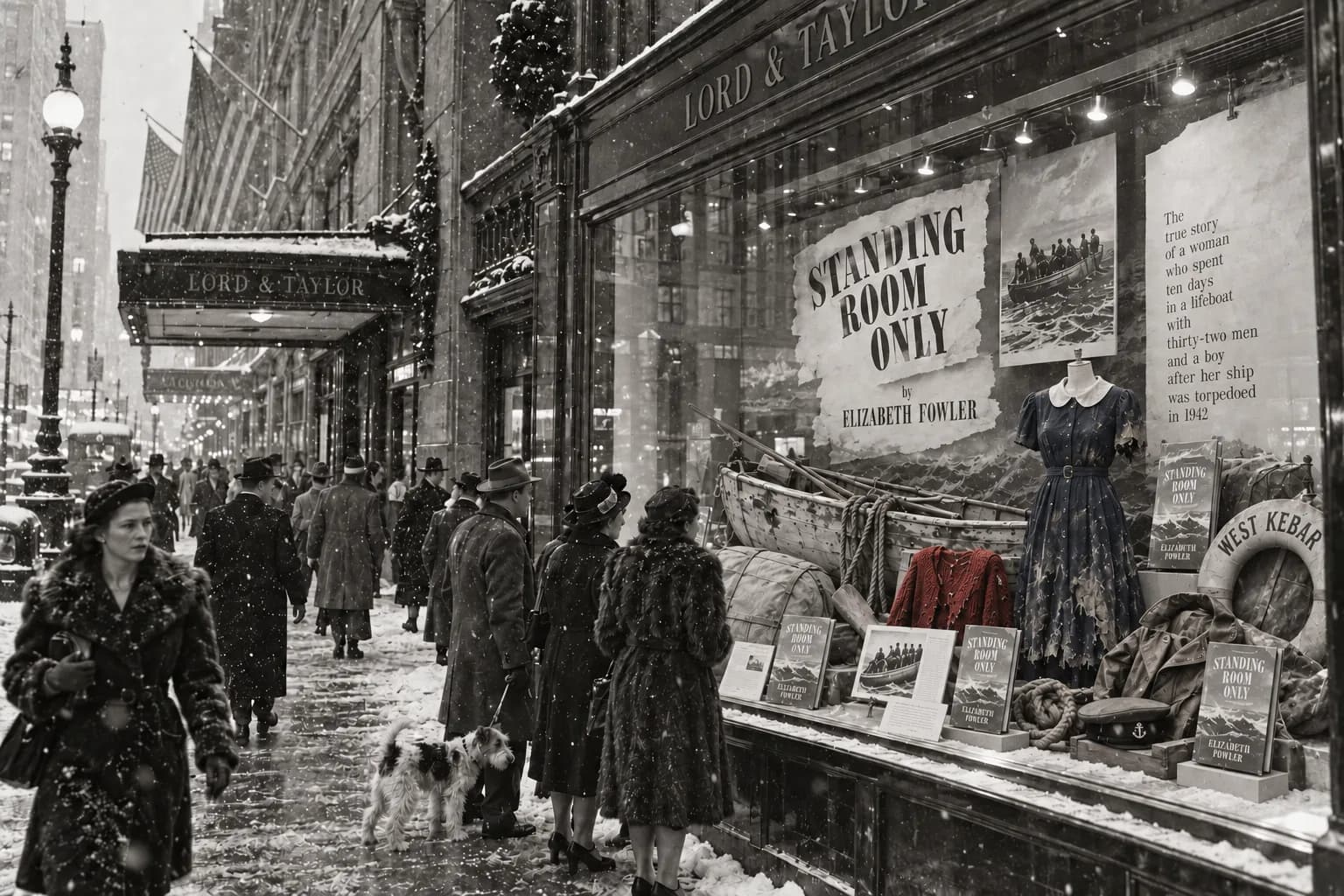
A reconstruction: New Yorkers in winter coats stop in the snow on Fifth Avenue outside the Lord and Taylor window, where Standing Room Only by Elizabeth Fowler is shown with a lifeboat, her navy linen dress, a scarlet knitted jacket and a West Kebar lifebuoy

The Lord and Taylor window, Fifth Avenue

“The dress she wore in the lifeboat was shown in a Lord and Taylor window.”

From my granny Liz Fowler’s obituary in 2003. Lord and Taylor on Fifth Avenue, New York, February 1944. Standing Room Only came out on 23 February. The store gave its front window to the book. New Yorkers stopped in the snow to look. In the window are the lifeboat, her navy linen dress and her scarlet knitted jacket. A West Kebar lifebuoy lies beside them with a seaman’s cap and oilskin.

Reconstruction.

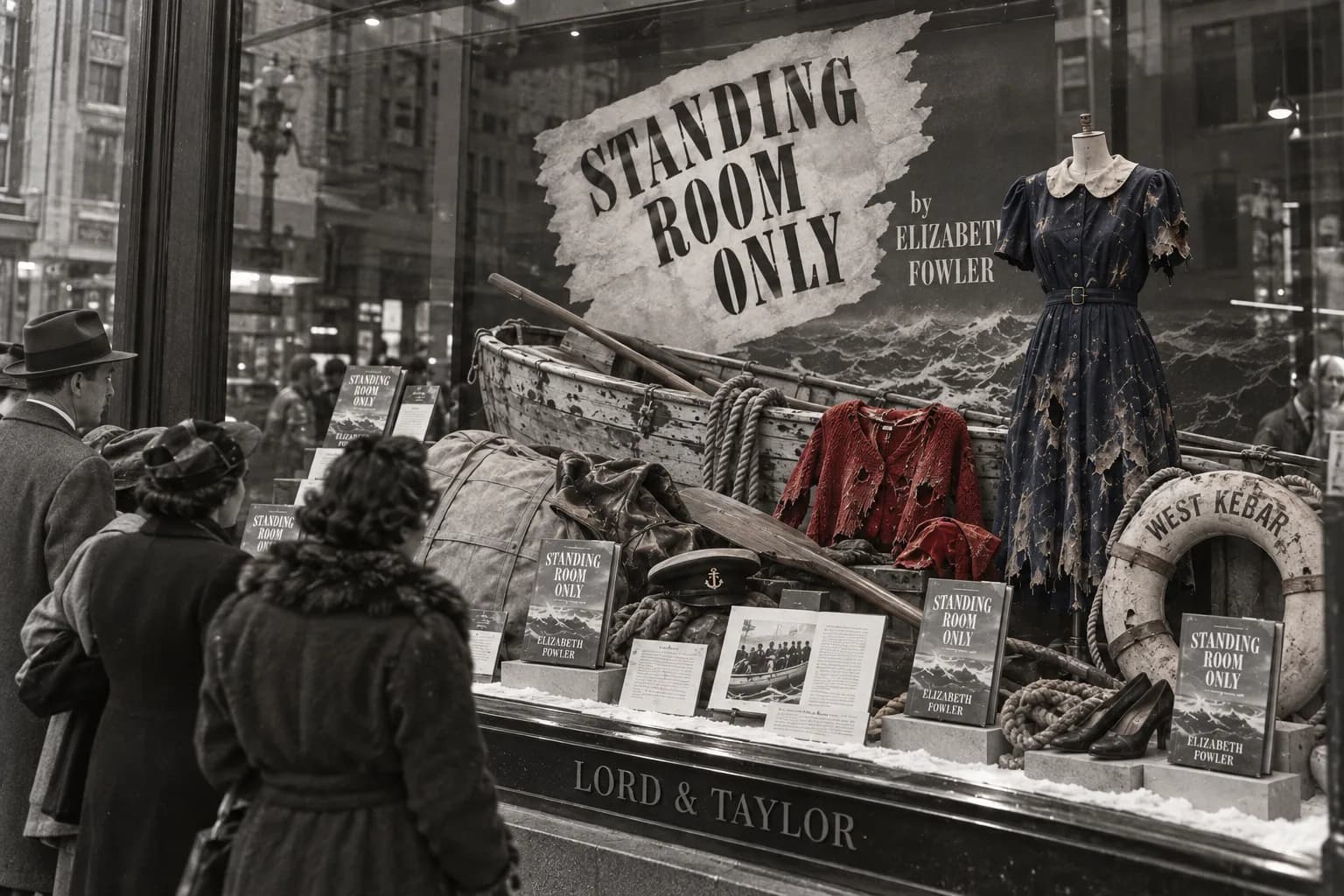
A reconstruction: close up on the Lord and Taylor window, the torn and stained navy linen dress with its white collar on a dress form, the ragged scarlet jacket, the lifeboat, a West Kebar lifebuoy and copies of Standing Room Only

The dress and the lifeboat

“I battled with my clammy dress. I was wrapping myself in a dead fish.”

The Lord and Taylor window close up, February 1944. On show is the navy linen dress my granny wore for ten days in the lifeboat. Its white collar has gone limp and grey. The skirt is torn and stained with sea water and palm oil from the West Kebar’s cargo. Beside it are the lifeboat and copies of her book.

Reconstruction.

“A rescue by lifeboat, minus the glamour.”
The New York Times Book Review, 12 March 1944
“For the most part, good plain endurance, or, as they would have put it, guts, triumphed.”
Elizabeth Fowler, Standing Room Only, 1944
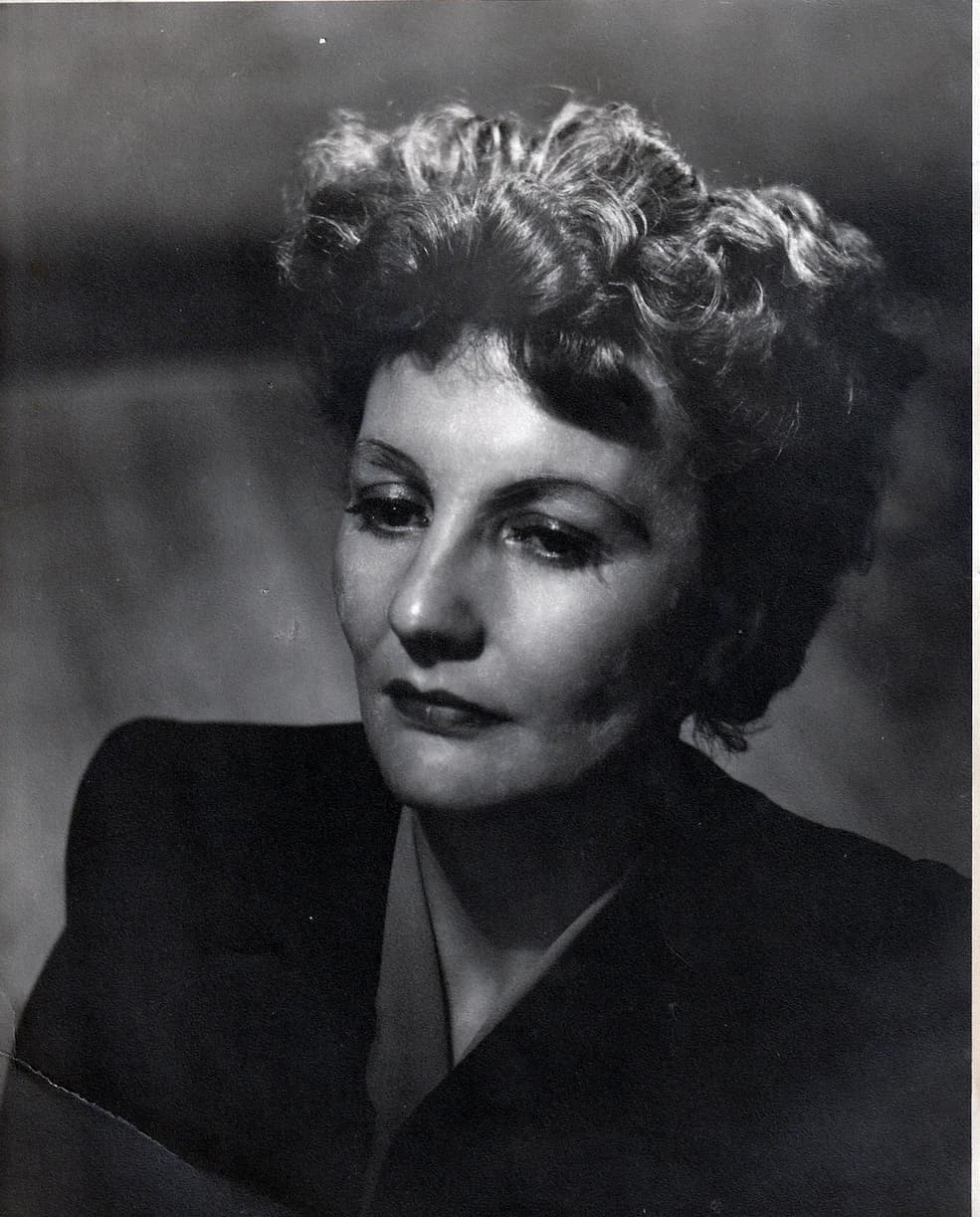
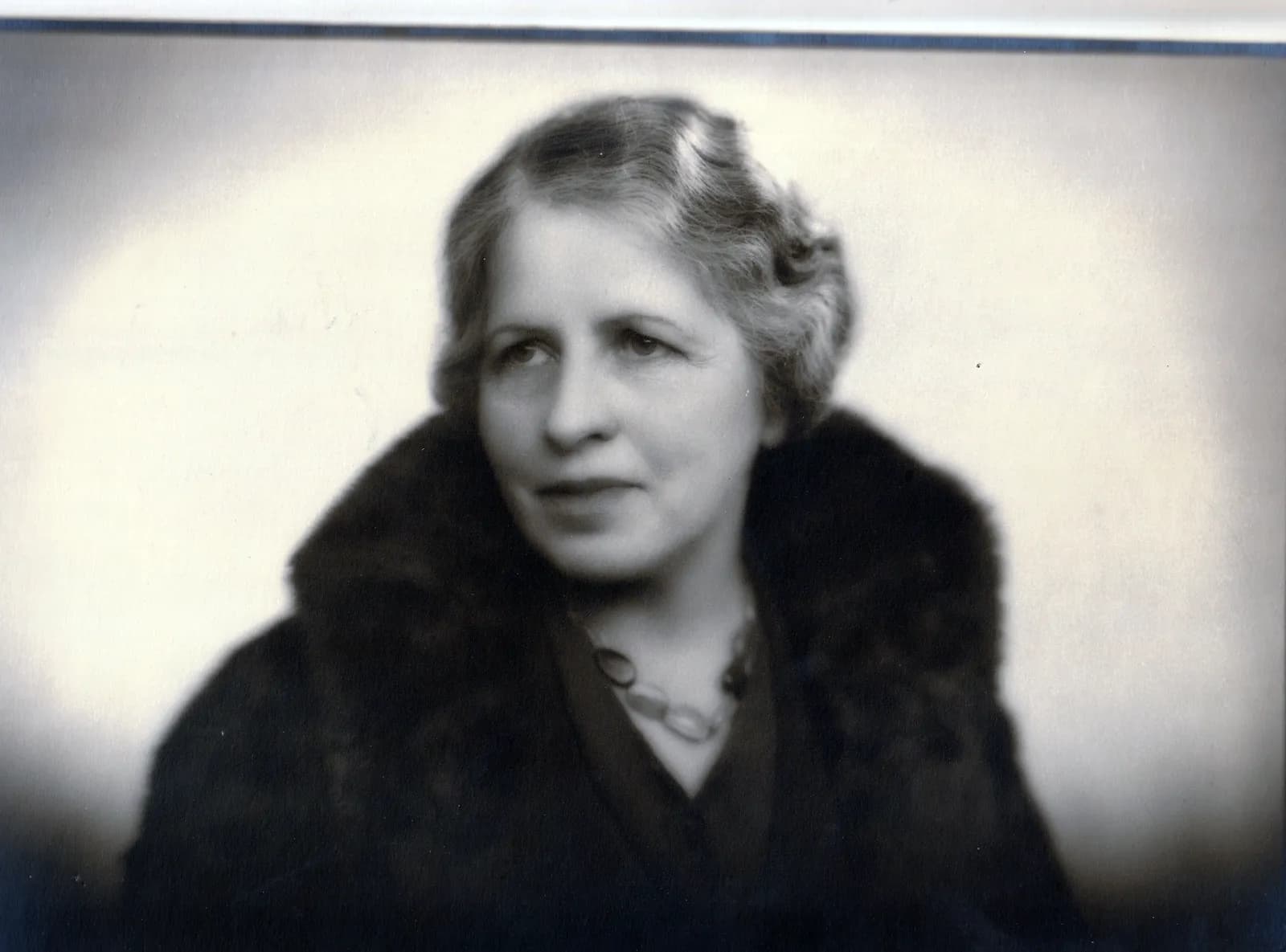
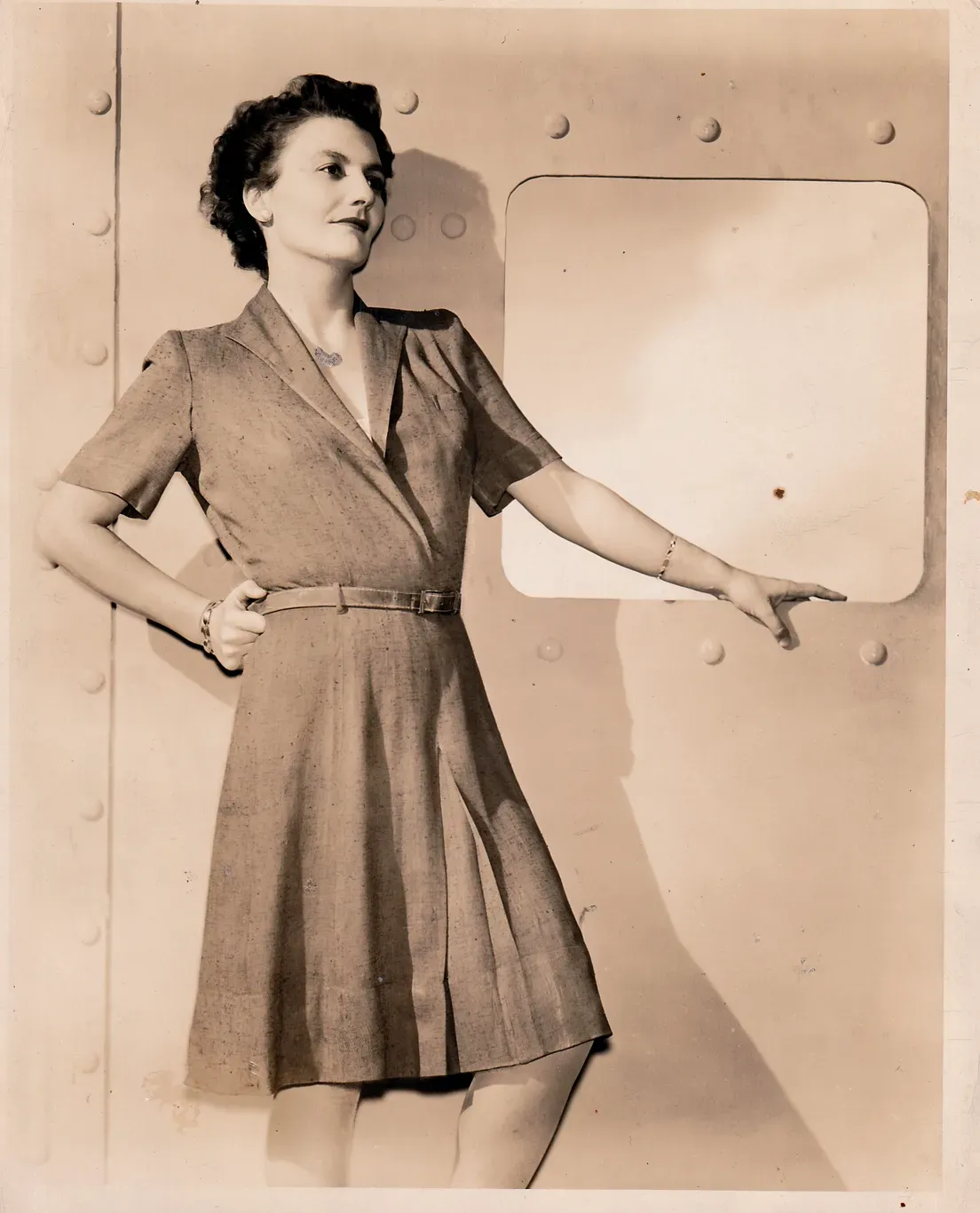
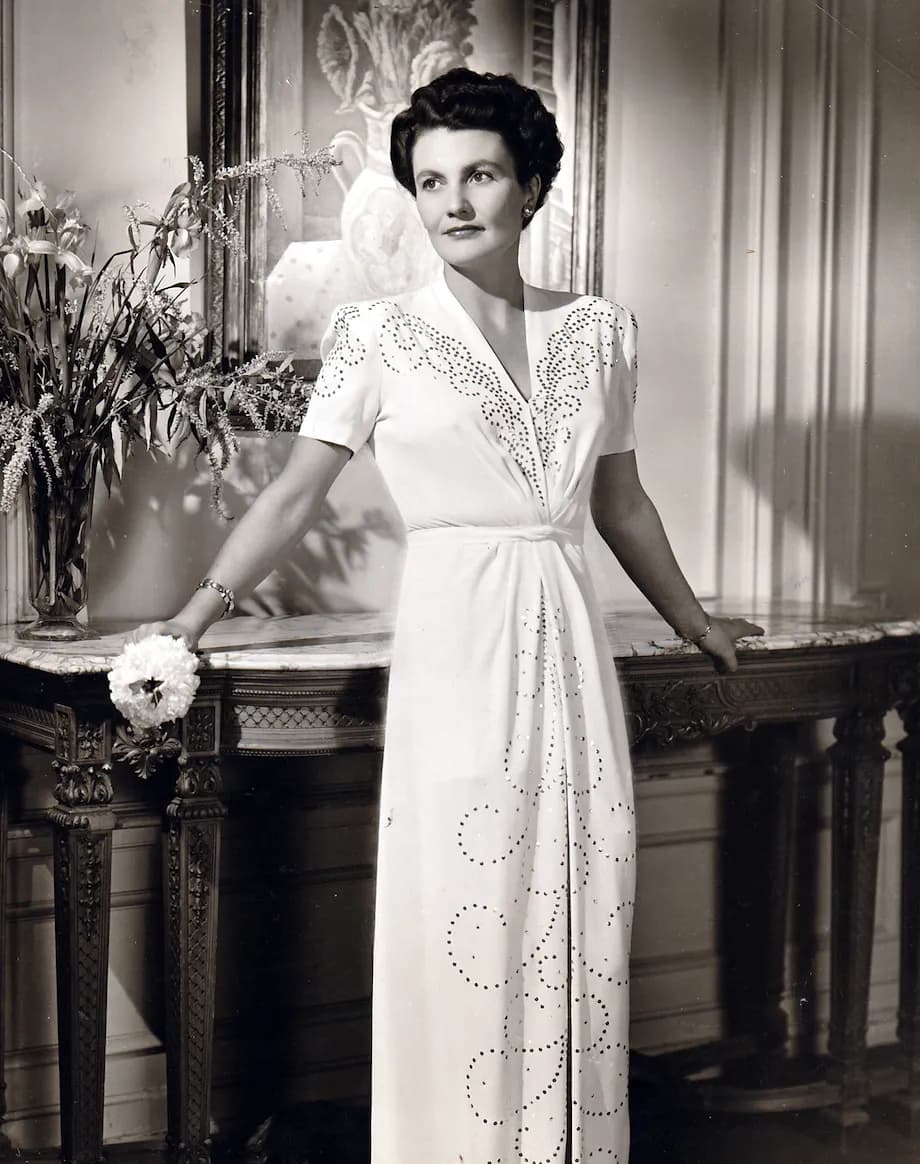
Elizabeth Fowler, 1944, portrait by Robin Carson
  • “No sugar-coated saga, but realism with retchings, a tight, terse tale of war drama where each swell of a wave is matched by the surge of a human emotion.”

    The New York Times Book Review, 12 March 1944

  • “A graphic, intensely interesting account. There are no heroes, no villains, just plain men and a woman fighting for life against the elements, all completely undramatized.”

    The Springfield Republican, 5 March 1944

  • “She tells it all without flamboyance or egoism, frequently with wry, feminine humor.”

    The Springfield Republican, 5 March 1944

  • “A woman in a small craft has problems peculiar to her sex and Mrs Fowler hedges on none of them.”

    The New York Times Book Review, 12 March 1944

  • “Though the men resented ‘that woman’, she was evidently a good shipwreck companion.”

    The Springfield Republican, 5 March 1944

  • “The powers of endurance latent within a soft human body have been demonstrated again and again during this war, but seldom so graphically as in this personal record.”

    Mabel S. Ulrich, 8 April 1944

  • “It makes almost unbearable reading at times, but in the forthright directness of its telling it becomes so vivid and exciting that once begun it is impossible to put it down.”

    Mabel S. Ulrich, 8 April 1944

  • “Packed tight, like the shuttle from Times Square to Grand Central at rush hour.”

    The New York Times Book Review, 12 March 1944

  • “She came to know during her ten days in an open boat the true barbarity of man pitted against man.”

    The New York Times Book Review, 12 March 1944

  • “The only woman in that open boat in the open sea.”

    The Des Moines Register, 19 March 1944

  • “Mrs Fowler’s final pages, about the shock of being rescued, about the astonishment of recovered privacy, and also about the amazingly thoughtless treatment of the survivors, make this book a bit different.”

    The Des Moines Register, 19 March 1944

  • “Complainers about rationing might well read about getting along on one mouthful of food and two ounces of water.”

    The Springfield Republican, 5 March 1944

  • “When at last they sighted Barbados a numbing apathy had descended upon them all. They had almost ceased to care.”

    Mabel S. Ulrich, 8 April 1944

Reviews of the first edition, Standing Room Only by Elizabeth Fowler, Dodd, Mead & Company, New York, 1944.

The family

“A wartime shipwreck on the Atlantic that impacted three generations of a family.”

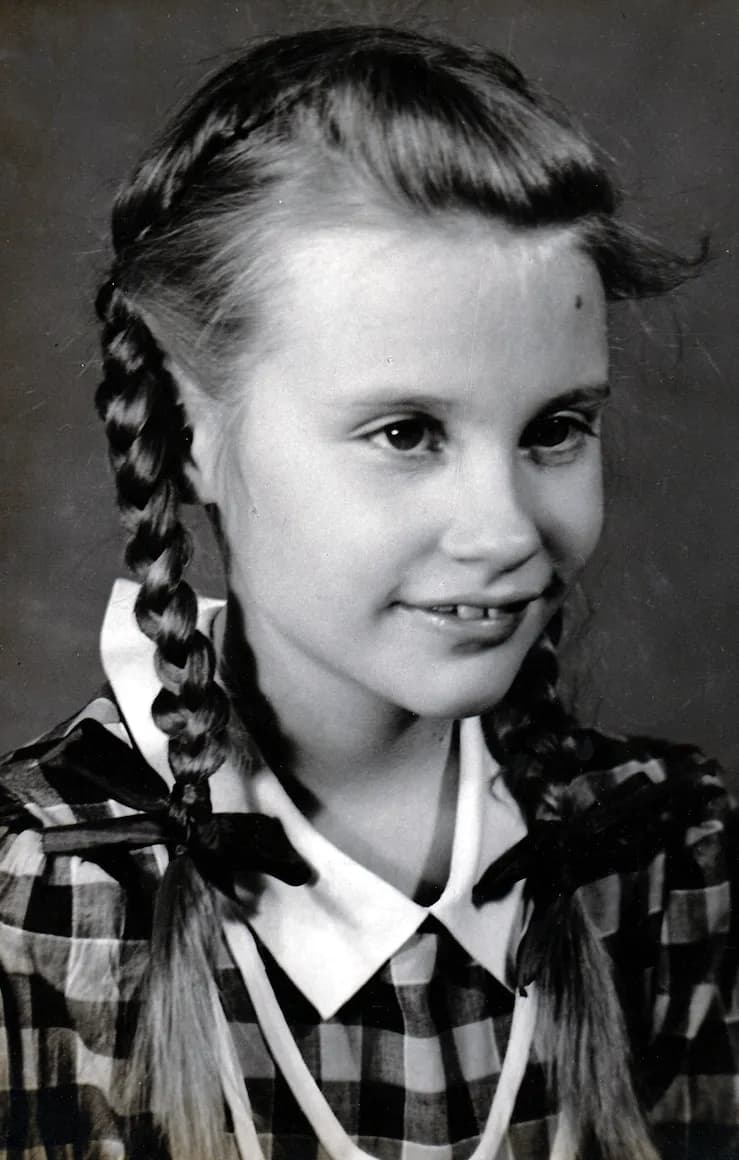
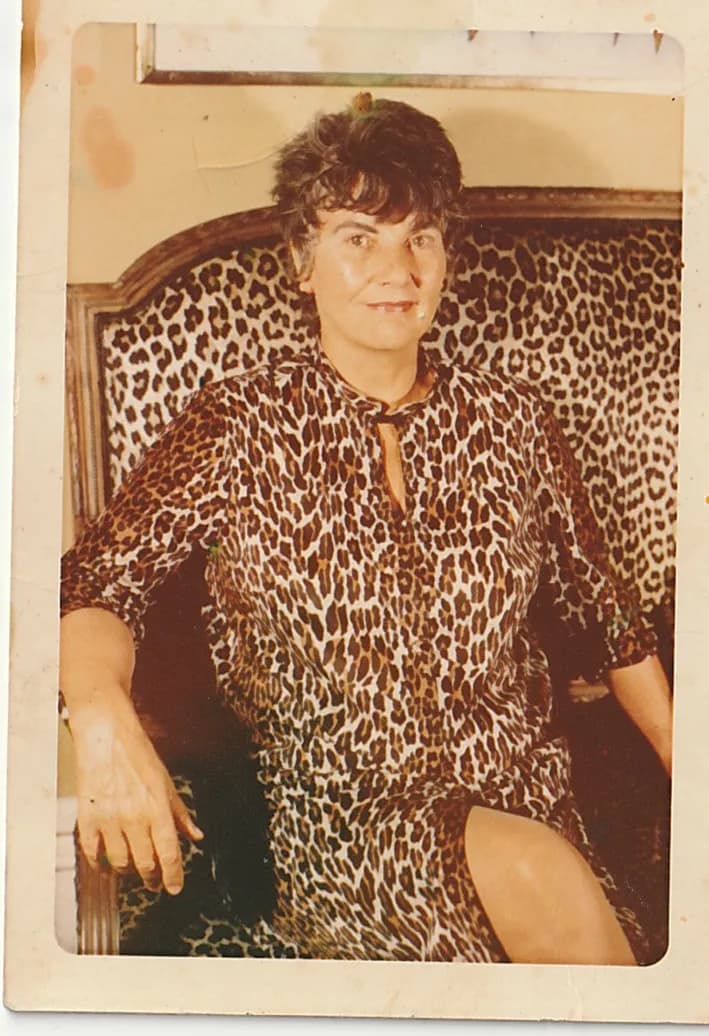
Family photographs

12 photographs

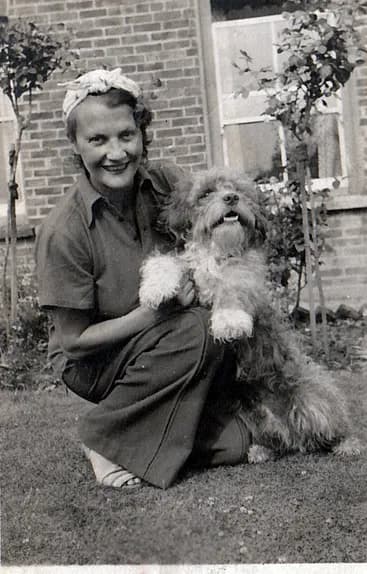
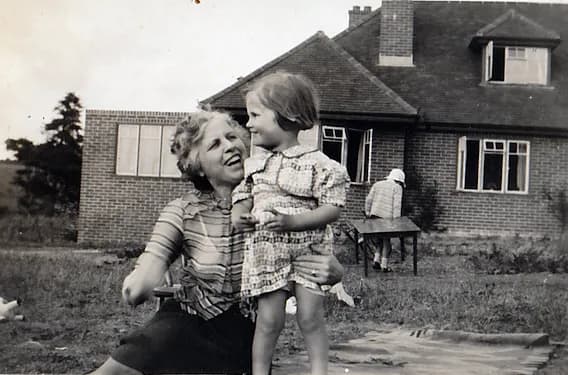
Elizabeth Fowler with Stanley, The Orchard, 1938
01Elizabeth Fowler with Stanley, The Orchard, 1938
01 / 12
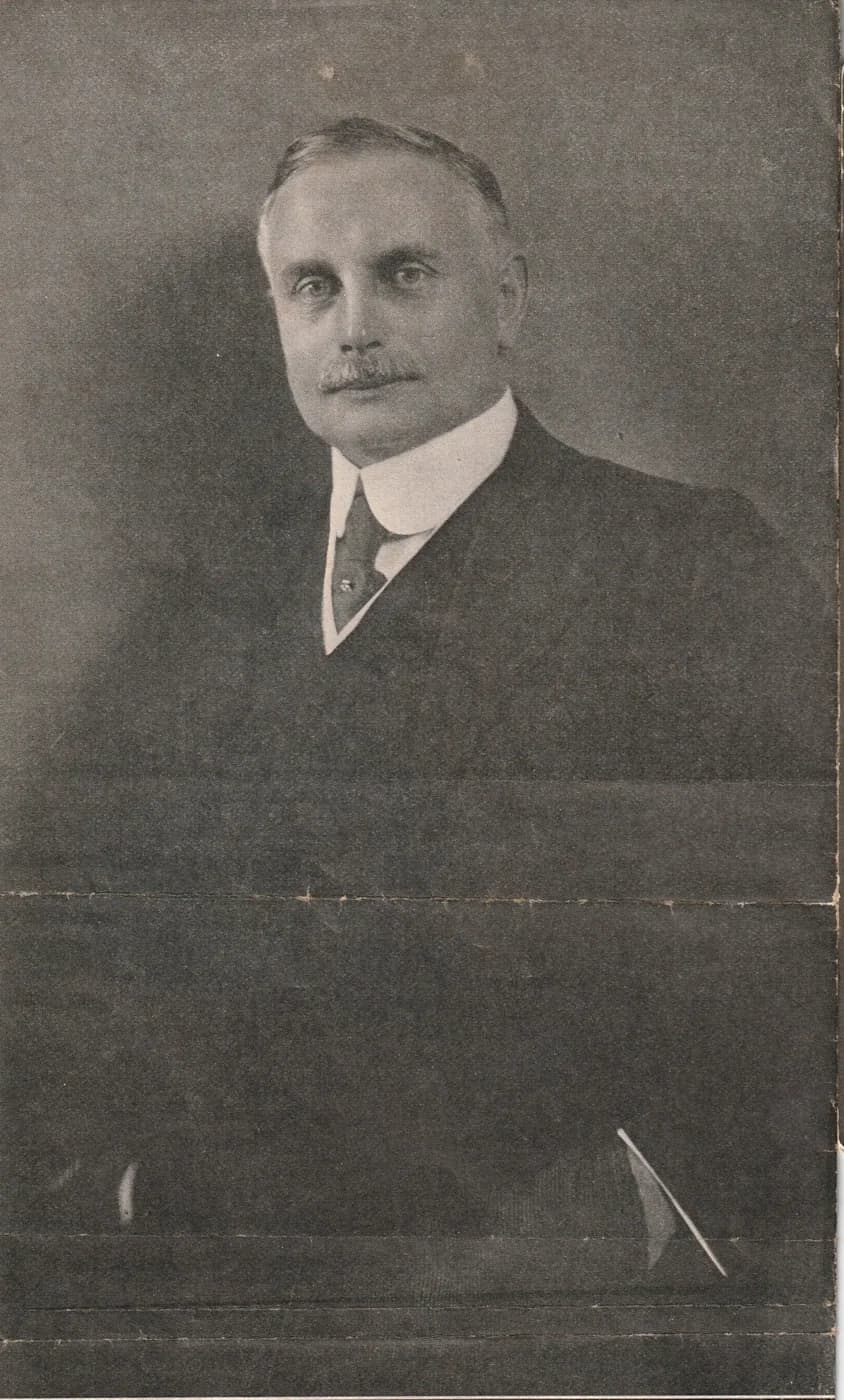
Sir Henry Japp, K.B.E., a printed portrait of a moustached man in a dark suit and high white collar

Sir Henry Japp, K.B.E.

Elizabeth’s father. Born at Montrose in 1869, a civil engineer. For twenty years with S. Pearson and Son, in charge of the Surrey Commercial Docks, the Great Northern and City Railway in London and the East River tunnels in New York, which took the Pennsylvania Railroad under the river into Manhattan.

Elizabeth was born in New York in 1908 while he was building them.

In the First World War he was Director of Productions at HM Factory Gretna, the great cordite factory on the Solway, and then went to America with the British War Mission. He was knighted K.B.E. in the King’s Birthday Honours of June 1918 for that war work. In 1938 he was one of the three engineers who approved the Anderson shelter. He died at home at 10 The Orchard, Bedford Park, in April 1939, aged sixty-nine.

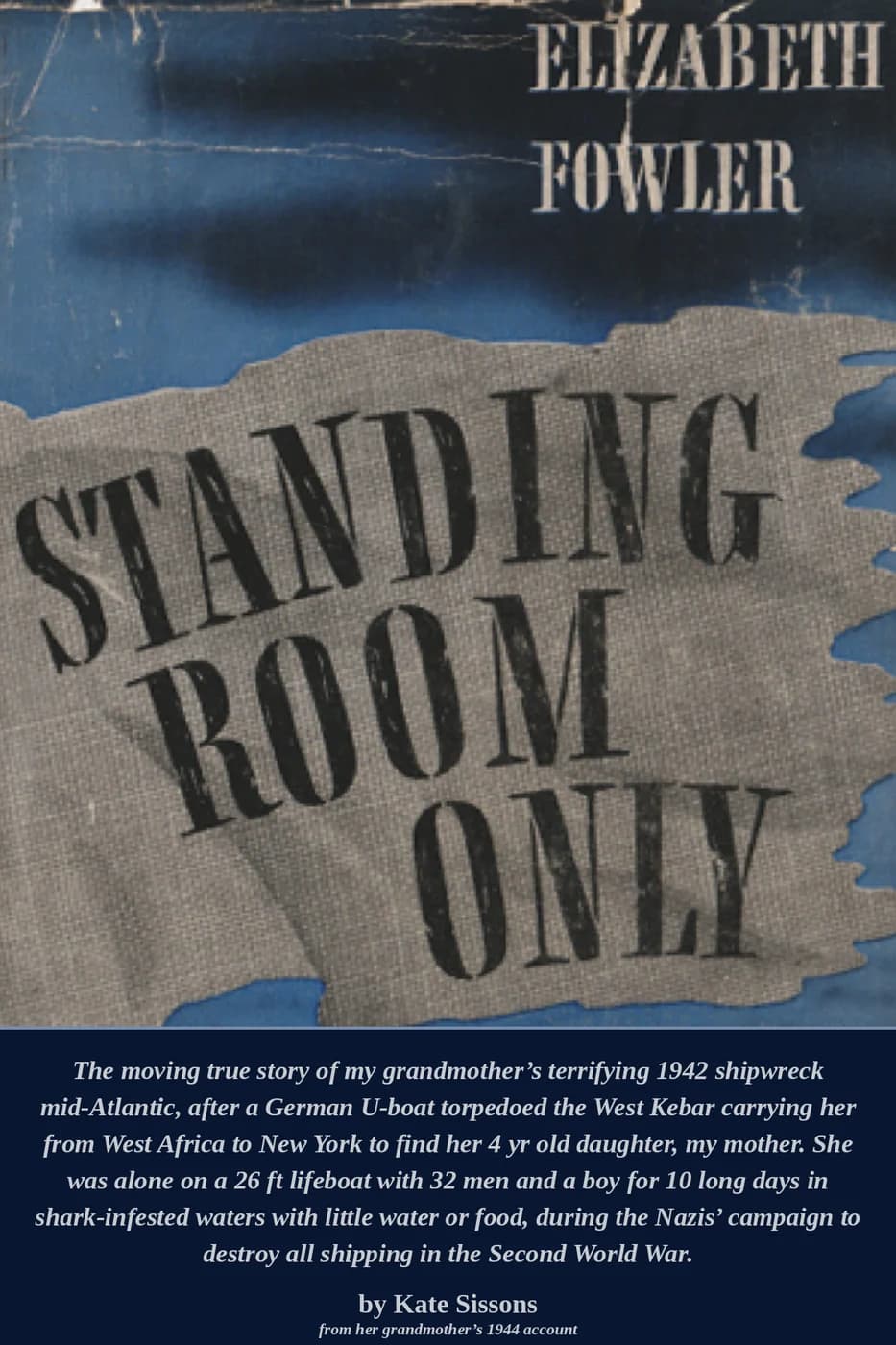
The cover of Standing Room Only: the torn 1944 jacket, with Elizabeth Fowler’s name and the title on a grey flag over a blue sea

The book

by Kate Sissons, from her grandmother’s 1944 account

The moving true story of my grandmother’s terrifying 1942 shipwreck mid-Atlantic, after a German U-boat torpedoed the West Kebar carrying her from West Africa to New York to find her 4 yr old daughter, my mother. She was on a 26 ft lifeboat with 32 men and a boy for 10 long days in shark-infested waters with little water or food, during the Nazis’ campaign to destroy all shipping in the Second World War.

Three voices carry it. Elizabeth’s own account, published by Dodd, Mead in 1944, reviewed by the New York Times and out of print since, polished and expanded with three new Accra chapters and the night from the ship. Nicky’s, who never forgave her mother for leaving her. And Kate’s, who cared for Nicky through eleven years of Alzheimer’s dementia and found, in the Colonial Office Lists and a birth certificate on her own desk, the grandfather nobody mentioned.

It is a sea story with a woman at its centre, a Ghana story, a war story about the children sent away, and a story about what a rescue does not repair.

“A rescue by lifeboat, minus the glamour.”
The New York Times Book Review, 12 March 1944

The ship

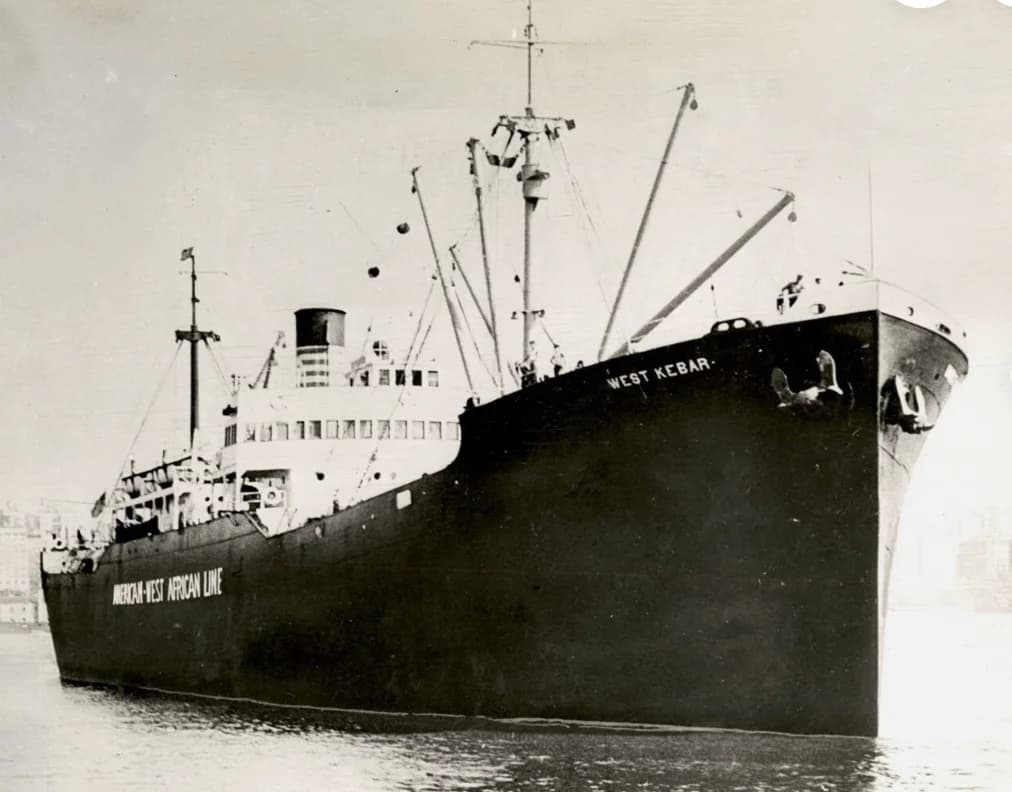
The West Kebar, a black-hulled freighter, with her name on the bow and American-West African Line painted along her side
The West Kebar, American-West African Line. Undated photograph.
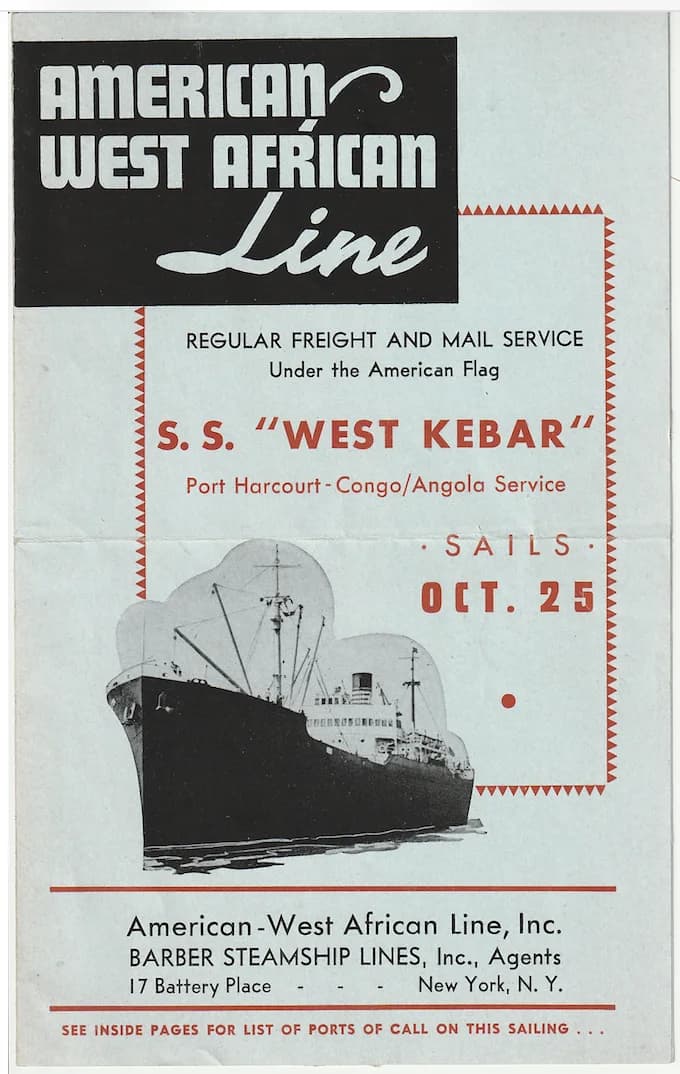
American-West African Line sailing card for the S.S. West Kebar, Port Harcourt, Congo and Angola service, sails Oct. 25
Sailing card, American-West African Line. Port Harcourt, Congo and Angola service, sails 25 October, year unknown.

The lifeboat

“The devil himself has schemed the proportions of a lifeboat.”
Elizabeth Fowler, Standing Room Only, 1944

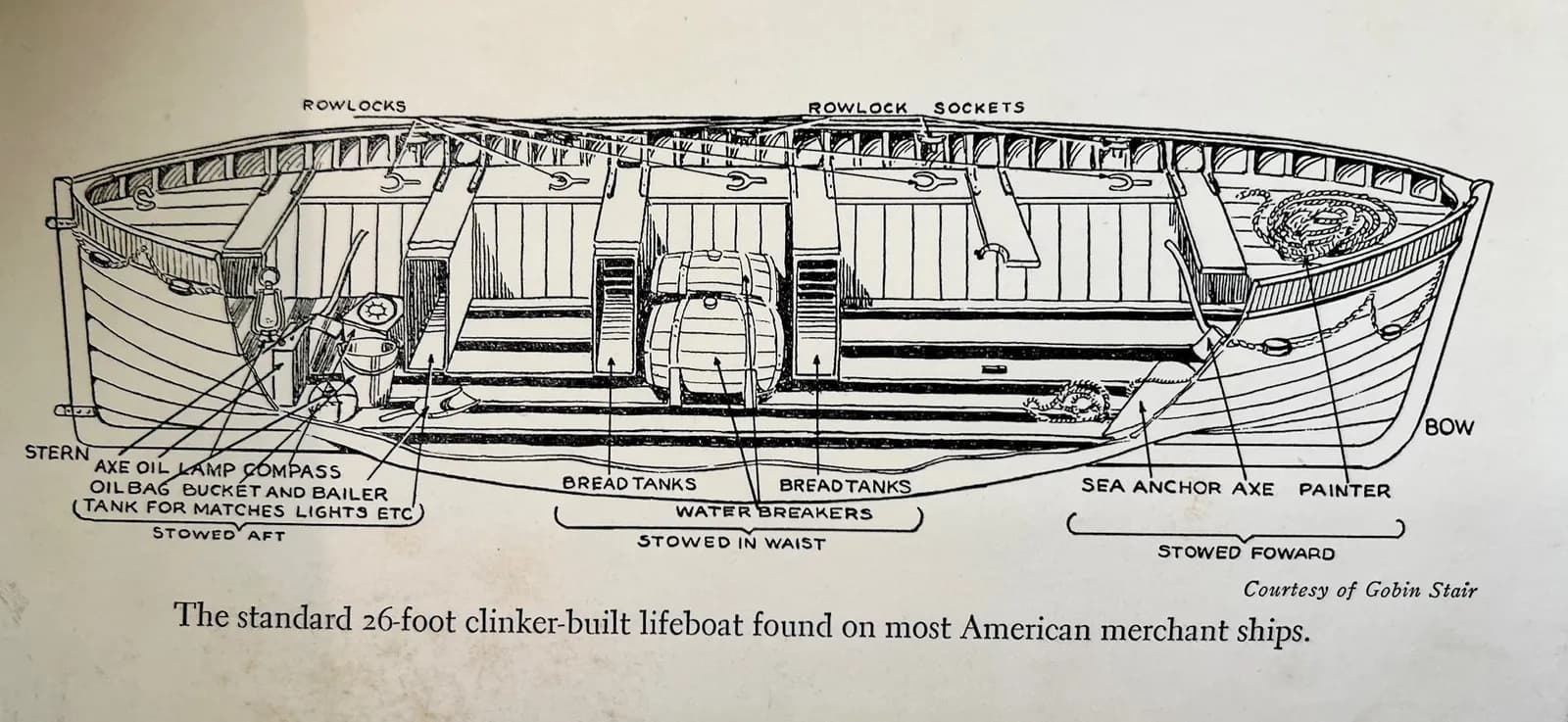
Twenty-six feet is the length of two family cars. Into it went thirty-two men, a boy and one woman, for ten days.

They were packed like sardines unable to move having to take it in turns to move off the tiny wooden plank some sat on. Others weren’t so lucky lying in bilge water and palm oil in the belly of the boat.

Cutaway drawing of a 26-foot clinker-built lifeboat, showing the bread tanks, water breakers, sea anchor, axe, bucket and bailer
The standard 26-foot clinker-built lifeboat found on most American merchant ships. Drawn for the 1944 book, courtesy of Gobin Stair.
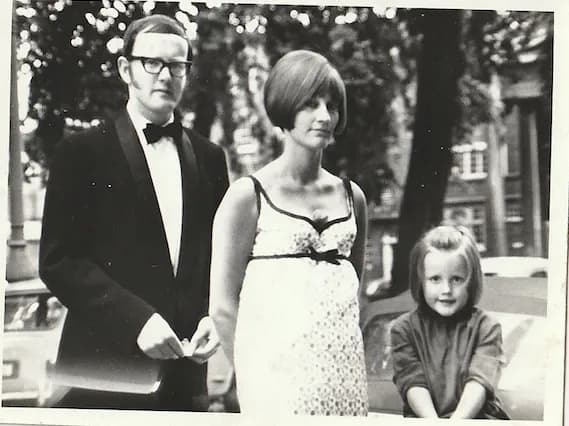
Kate with her parents, Michael and Nicky Sissons, 1965
Kate with her parents, Michael and Nicky Sissons, 1965.

Kate Sissons

Kate Sissons is the granddaughter of Elizabeth Fowler, the only woman in the lifeboat, and the daughter of the four-year-old waiting at Grand Central Station.

Kate has spent the past four years on this, since her mother died and she read the book. It has been a lot of work.

Along the way she found, in the Colonial Office Lists, the shipping records and a birth certificate in a folder on her own desk, the grandfather nobody in the family ever mentioned.

Kate lives in Oxfordshire.

Kate’s other work: Losing the Plot: D is for Dementia and Knee Deep in Knightsbridge.

Write to Kate